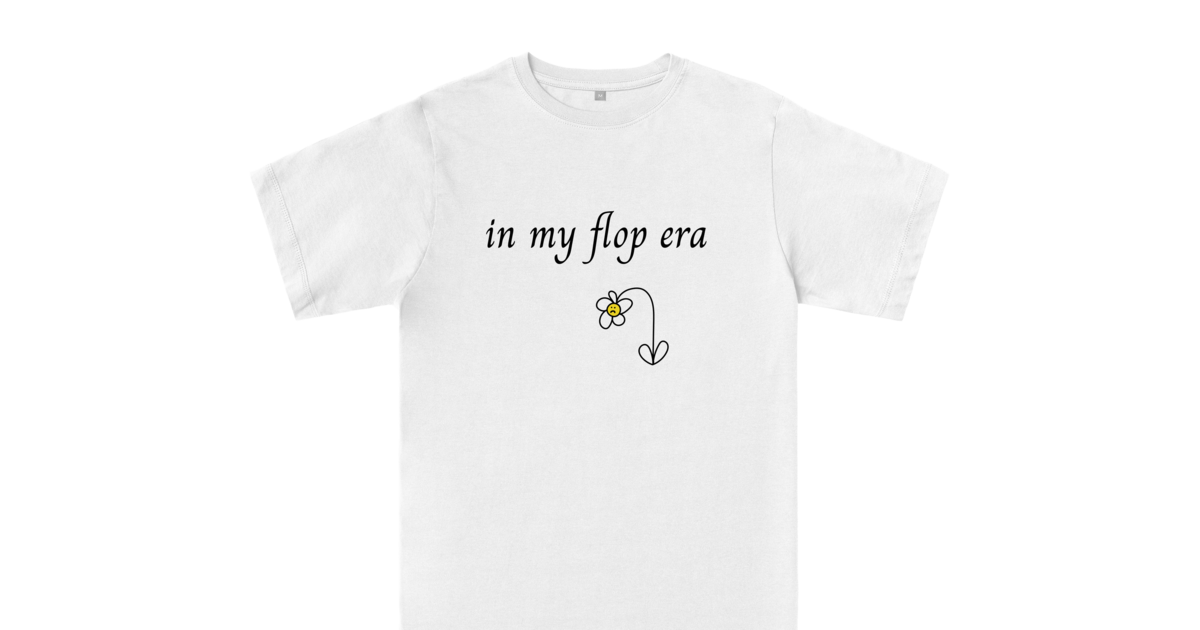
You're failing. Or at least, it feels like it. Maybe the project you poured six months into just tanked, or your engagement is hitting rock bottom, or you’re currently the main character of a Twitter thread for all the wrong reasons. In internet speak, you’ve entered your flop era. But here is the thing: your flop era is lowkey serving a purpose that your peak performance never could.
It sounds like cope. I know. But if you look at the lifecycle of literally any major cultural icon—from Anne Hathaway’s "Hathahate" period in 2013 to the way tech companies like Meta were written off during the 2022 pivot to the metaverse—the "flop" is rarely the end of the book. It is usually the rebrand.
The psychology of why your flop era is lowkey serving
Social media has conditioned us to believe that life should be a constant upward trajectory. Up and to the right. Always. But humans aren't software updates; we don't just get incrementally better until we reach perfection. We are cyclical.
When people say your flop era is lowkey serving, they are tapping into a specific kind of liberation that comes from having nothing left to lose. When you are winning, you are terrified of making a mistake. You play it safe. You stick to the formula because the formula is working. But when the formula stops working? That is when you actually start getting creative again.
Freedom in the failure
Honestly, there is a weird kind of peace that comes with being "over." Once the worst-case scenario has happened—the breakup is public, the business failed, the reputation is dented—the pressure to maintain an image evaporates. You can finally stop performing. This is why some of the best art, the best pivots, and the most authentic lives start right in the middle of a disaster.
Real-world examples of the "Serve" after the "Flop"
Look at the career of someone like Robert Downey Jr. before the MCU. In the late 90s, he wasn't just "flopping"; he was considered fundamentally unemployable by every major studio in Hollywood. His personal life was a mess, and his professional value was zero. Yet, that era was "serving" the grit and the perspective he needed to eventually become the literal face of the biggest film franchise in history. He had to lose the "it boy" status to become the "Iron Man."
In the business world, we see this with "pivots." Slack didn't start as a communication tool. It started as a failed video game called Glitch. The game flopped. Hard. But the internal chat tool the developers built to talk to each other while making that failing game? That was the serve. If they had been moderately successful with the game, they would have stayed mediocre forever. They had to flop to find the billion-dollar idea.
The cultural shift toward "Flop Literacy"
We are seeing a move away from the "Girlboss" era of 2014, where everything had to be polished and perfect. Now, Gen Z and Alpha are embracing the "flopped" aesthetic. It’s more relatable. It’s "lowkey serving" because it shows you’re human. TikTok trends are increasingly centered around "failing loudly"—showing the messy room, the burnt dinner, the rejection letter. It builds a different kind of social capital: authenticity.
How to tell if you are actually serving or just sinking
Not every bad patch is a productive one. To ensure your flop era is lowkey serving something useful, you have to be able to distinguish between a "dead end" and a "detour."
- Are you learning a new skill by accident? Like the Glitch developers, look at the side effects of your failure. Are you getting better at coding because you’re trying to fix a broken site? Are you getting better at conflict resolution because your team is falling apart?
- Is your ego shrinking? This is the most painful part, but the most necessary. A flop era that kills your arrogance is always serving a better version of you.
- Are you experimenting? If you’re just sitting in your room crying, you’re just flopping. If you’re trying weird stuff because "why not?", you’re serving.
The "Post-Flop" Rebrand
The comeback is a cliché for a reason. But the comeback doesn't happen by trying to go back to who you were before the flop. That person is gone. The serve is in the evolution.
Take a look at Taylor Swift’s Reputation era. After the 2016 "snake" incident, she disappeared. She flopped in the court of public opinion for a solid year. But she didn't come back trying to be the "America's Sweetheart" of the 1989 era. She leaned into the villain arc. She used the flop as the aesthetic foundation for the next phase.
Why the "Peak" is actually more dangerous
Success is a trap. When you’re at the top, you’re paralyzed by the fear of falling. The flop era is the only place where true growth happens because the floor is literally right there. You can’t fall any further. You can only build.
Actionable steps to leverage your flop era
If you feel like you're in the thick of it right now, stop trying to fix it immediately. Instead, lean into the utility of the moment.
- Audit your audience. Who stayed? When things go south, the people who stick around are your real community. The fair-weather fans will leave. Let them. This is the time to solidify the relationships that actually matter.
- Document the mess. Don't just share the highlights later. Take notes now. What does it feel like? What led to this? This data is gold for your future self.
- Lower your stakes. Take this time to try the things you were too "successful" to try before. Start that weird hobby. Post the unedited video. Write the "bad" first draft.
- Change the narrative. Start telling yourself that this isn't a tragedy; it's the "before" montage. Every great story needs a low point for the climax to feel earned.
The truth is, your flop era is lowkey serving because it provides the contrast necessary for greatness. Without the valley, the mountain is just a flat plain. Stop apologizing for the slump and start looking for the lesson, the pivot, or the rebrand hiding in the wreckage.
Move forward with these priorities
Stop checking your old metrics. They belong to a person who doesn't exist anymore. Focus on one small, weird project that has nothing to do with your previous success. Build something for an audience of one. Use the silence of the "flop" to hear your own voice again, away from the noise of expectations. That is where the real serve begins.