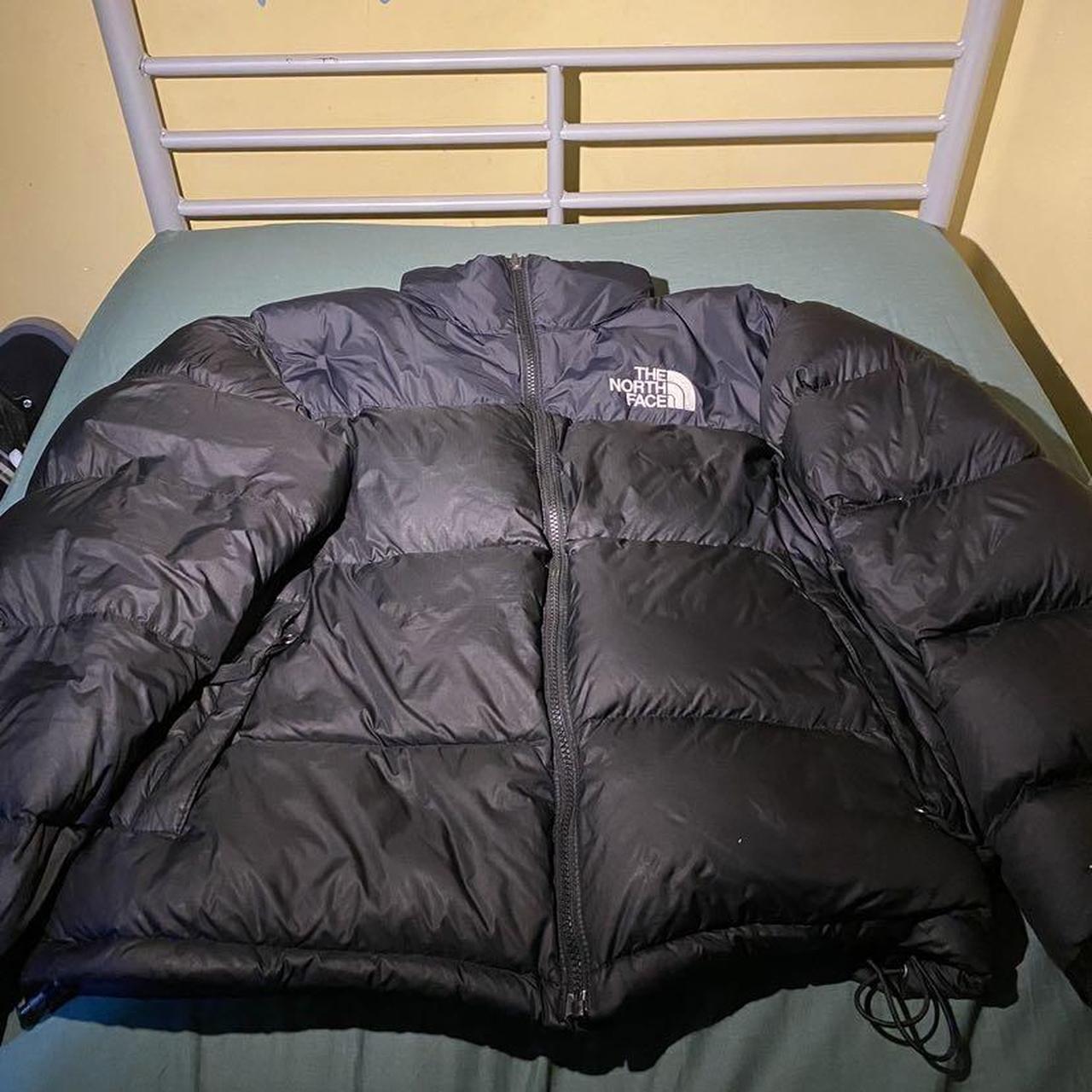
Walk through Soho, Tokyo, or a freezing Chicago morning, and you'll see it. It’s that distinctive, boxy silhouette with the thick baffles. People often call it the North face 700 jacket, though if you want to be technical—and gear nerds usually do—they’re actually talking about the Nuptse.
The "700" isn't a model number. It's the fill power.
But honestly, the branding worked so well that the number became the identity. It’s funny how a piece of high-altitude mountaineering gear from 1992 ended up becoming the uniform for everyone from 90s rappers to suburban dads and college students. You’ve probably wondered if it’s actually worth the $300+ price tag or if you’re just paying for the Half Dome logo.
It’s warm. Like, suspiciously warm for how light it feels.
What the 700 Number Actually Means (And Why It Isn't Just Marketing)
When you see that embroidery on the sleeve, it refers to the quality of the down inside. In the world of insulation, fill power is basically a measurement of "loft." You take one ounce of down, put it in a glass cylinder, and see how many cubic inches it fills up.
700 fill power means one ounce of that down occupies 700 cubic inches of space.
Higher numbers mean the down clusters are larger and can trap more air. Air is what actually keeps you warm, not the feathers themselves. While you can find 800 or 900 fill jackets for extreme alpine climbing, 700 is widely considered the "sweet spot" for lifestyle gear. It’s robust. It doesn't collapse as easily as the ultra-fine 900-fill stuff might if it gets a bit of moisture or dirt on it.
Most people don't realize that North Face uses Responsible Down Standard (RDS) certified goose down. This isn't just a feel-good label; it’s a supply chain tracking system that ensures the birds weren't force-fed or live-plucked. It matters because high-quality down is a byproduct of the food industry, and the 700-grade stuff is specifically chosen for its ability to bounce back after you've stuffed the jacket into its own pocket.
The Nuptse vs. The Rest of the Lineup
If you go to a North Face store today, you’ll see the '96 Retro Nuptse. This is the "North face 700 jacket" everyone is looking for. It has that cropped fit—it hits right at the waist—and those massive, oversized baffles that make you look a bit like the Michelin Man in a cool way.
But there are other 700-fill options.
Take the Summit Series. Those are the technical pieces. They use 700-fill or higher but the face fabric is much thinner to save weight for climbers. Then there’s the Himalayan Parka, which often uses 700-fill but wraps it in a heavy-duty, windproof shell.
The Nuptse is the weird middle child. It uses a shiny ripstop fabric that was originally meant to handle backpack straps on a mountain, but now it mostly handles the strap of a tote bag. It's durable. I've seen Nuptses from the late 90s still going strong on eBay, though the down usually needs a good tumble dry with some tennis balls to get the loft back.
A Quick Reality Check on Water Resistance
Here is where people mess up. This jacket is not a raincoat.
The fabric has a DWR (Durable Water Repellent) coating, which means light snow or a quick drizzle will bead off. But if you get caught in a downpour? You’re in trouble. Down loses all its insulating properties when it’s soaking wet. It turns into a heavy, soggy clump that smells like a wet dog.
If you live in a place like Seattle or London where it’s 40 degrees and raining constantly, you basically have two choices. You either wear a shell over your North face 700 jacket, or you look into their synthetic "Thermoball" options. Synthetic doesn't have the same "puff" factor, but it stays warm when wet.
Why the 1996 Retro Nuptse Is the Current King
Fashion works in cycles, but some things just plateau at the top. The '96 Retro model is popular right now because it fixed the mistakes of the early 2010s. For a while, North Face tried to make the Nuptse slimmer and longer. It looked... fine. But it lost the soul of the original.
The current '96 version brought back:
- The boxy, wide fit that allows for heavy hoodies underneath.
- The stowable hood that’s basically useless in a storm but great for wind.
- The internal pocket that the entire jacket folds into.
- The original shiny fabric finish.
It feels substantial. When you put it on, there’s a literal "puff" of air that escapes the collar.
Sizing is Honestly a Nightmare
You’d think a jacket this famous would have easy sizing. Nope.
If you buy your "normal" size, it’s going to feel short. That is by design. It’s meant to sit at the hip so it doesn't bunch up when you're wearing a climbing harness or sitting down. If you’re tall, you might find yourself constantly pulling it down.
A lot of guys size up for that oversized streetwear look, but then the sleeves get way too long and the wind starts blowing up from the bottom because the waist cinch can’t close the gap. My advice? Stick to your true size but expect it to feel "cropped." If you want a long jacket, the Nuptse isn't for you. Look at the McMurdo Parka instead.
Counterfeits and the "Used" Market Warning
Because the North face 700 jacket is a global icon, the fake market is insane.
If you see a "brand new" Nuptse on a random website for $80, it is 100% fake. Real 700-fill down is expensive. You can't fake the loft. Fake jackets usually use polyester batting or low-quality floor sweepings. They look flat.
Check the embroidery. On a real one, the "700" on the sleeve and the North Face logo on the chest and back should be crisp. The letters shouldn't be connected by stray threads. Also, look at the holographic tag inside. Since around 2010, North Face has included a tiny, shimmering sticker with a serial code. If that’s missing or looks like a cheap sticker from a toy store, walk away.
Maintaining the Loft (How Not to Ruin It)
You can actually wash these. People are terrified of it, but you should wash your down jacket at least once a season. Oils from your skin and neck eventually seep into the down and make it clump.
- Use a front-load washer only. Top-loaders with an agitator will rip the baffles apart.
- Get a specific down wash. Grangers or Nikwax are the gold standards. Regular detergent can strip the natural oils off the feathers, making them brittle.
- The dryer is mandatory. You cannot air-dry a down jacket. It will mold. You have to put it in the dryer on low heat with 3-4 clean tennis balls or "dryer balls." The balls smack the jacket as it tumbles, breaking up the wet clumps of down and forcing air back into the clusters.
It takes forever. Like, three cycles. But when it comes out, it’ll be puffier than when you bought it.
The Cultural Weight of a Puffer
It’s rare for a garment to be "classless."
A North face 700 jacket is one of those few items. You’ll see a billionaire wearing one in Aspen and a teenager wearing one in a council estate in London. It doesn't signal "I'm rich" as much as it signals "I know what works."
It’s basically the Porsche 911 of jackets. It hasn't really changed because the physics of staying warm haven't changed. While brands like Canada Goose or Moncler went for the luxury "fur-trim" look, North Face stayed rooted in that nylon-and-down utilitarianism.
Is it actually worth $300?
If you live in a climate where it hits freezing? Yes.
If you buy a cheap $60 puffer from a fast-fashion brand, it’ll be flat within a year. The "700" in a North Face jacket represents a level of quality that actually lasts a decade if you treat it right. Plus, the resale value is surprisingly high. You can usually sell a used Nuptse in good condition for 50-60% of its retail price years later.
Actionable Steps for Buyers
Don't just run out and buy the first black one you see. Think about how you'll actually use it.
First, check the "Fill" tag. Ensure it’s actually the 700-series if warmth is your priority. Some of the newer "lifestyle" versions use 550 or 600 fill to keep the price down, but they aren't nearly as warm.
Second, test the "stowaway" feature. If the jacket has been sitting compressed in a warehouse for six months, it might look thin. Shake it out. Hang it up. Give it 24 hours to "breathe" before you decide it's not puffy enough.
Third, look at the cuffs. The '96 Retro has Velcro closures and a "Snap-In" integration system. This means you can actually zip the Nuptse into a North Face Mountain Jacket shell. If you do this, you’ve basically created the ultimate winter armor—completely waterproof and insanely warm.
Finally, consider the color. The bright yellow and orange are "heritage" colors, but they show neck grime and dirt almost instantly. If you aren't prepared to wash it frequently, stick to the classic black or navy. It’s a tool, sure, but it’s a tool you want to look good in for the next five winters.