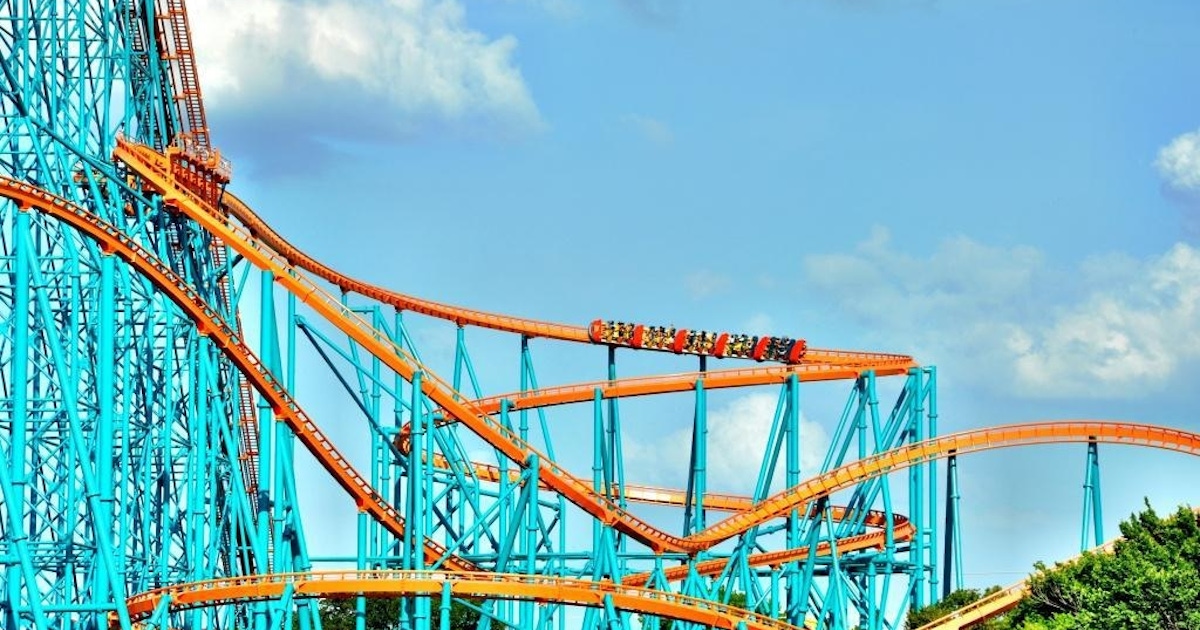
It was once a rattling, bone-shaking wooden behemoth that defined the Arlington skyline. Now, it is something else entirely. If you grew up in North Texas during the early nineties, you probably remember the original Texas Giant at Six Flags Over Texas. It was huge. It was loud. It was also, frankly, getting a little too painful to ride by the end of its first decade.
The New Texas Giant isn't just a ride; it’s a milestone in engineering history. Basically, this coaster saved the wooden ride experience by destroying the "wooden" part of it. When Rocky Mountain Construction (RMC) stepped in back in 2010 to gut the original structure and install the world's first I-Box track, they weren't just fixing a bumpy ride. They were inventing a whole new category of "hybrid" coasters.
People still argue about whether it counts as a wooden coaster. It doesn't. Not really. But that's kinda the point.
The Brutal Reality of the 1990 Original
The original Texas Giant opened in 1990. At the time, it was the tallest wooden roller coaster in the world, standing at 143 feet. It was a massive statement of intent from Six Flags. For a few years, it sat at the very top of the Golden Ticket Awards. It was fast, reaching 62 miles per hour, and it felt like it was going to tear itself apart at every turn. That was the appeal.
But wood is fickle. Texas heat is worse.
Over time, the expansion and contraction of the timber, combined with the sheer force of the trains, turned a "thrilling" ride into a "call your chiropractor" experience. Maintenance costs were skyrocketing. The park had a choice: tear it down or do something radical. They chose radical. They spent roughly $10 million—which was a staggering amount for a renovation at the time—to let a then-unknown company named RMC play with steel on top of the old wooden supports.
Why the New Texas Giant Change Everything
The "I-Box" track is the secret sauce here. Unlike traditional steel coasters that use tubular rails, the New Texas Giant uses a flat steel track shaped like a capital "I." This allows the train to stay locked to the course with incredible precision while maintaining the aesthetic of a classic wooden structure.
The drop was steepened from 53 degrees to a terrifying 79 degrees. It grew. It got faster. It hit 65 mph.
Honestly, the most impressive part is the airtime. Because the steel track is so smooth, designers could push the physics further than wood would ever allow. You spend a significant portion of the ride out of your seat. There are three separate tunnels, and the banked turns are crazy—some are tilted at 95 degrees, which is technically over-banked. You’re leaning further than sideways. It’s disorienting in the best way possible.
What to Expect When You Visit Arlington
If you're heading to Six Flags Over Texas today, the New Texas Giant remains the anchor of the Texas Section of the park. It’s a crowd-puller. Even with newer, faster rides like Titan or the high-tech Mr. Freeze: Victory Through Fear nearby, the Giant usually holds a respectable line.
You’ve got to be prepared for the restraint system. Unlike the old buzz bars, these are heavy-duty lap bars with individual leg restraints. They’re snug. They have to be, given how much the ride tries to eject you during the hills.
- The First Drop: It’s a long, slow crawl up the lift hill with a view of the Dallas Cowboys' AT&T Stadium to your left. Then, a sharp plunge that feels much steeper than it looks from the ground.
- The Mid-Course: The ride doesn't lose much momentum. It hauls through the structure, darting in and out of the wooden supports.
- The Tunnels: These provide a great "head-chopper" effect where it feels like you're going to hit the beams. You won't, but the illusion is perfect.
One thing to note: the ride is much smoother than a wooden coaster, but it’s still intense. It’s not a "family" coaster in the sense of being gentle. It’s a high-thrill machine.
The Controversy and the Legacy
We can't talk about this ride without acknowledging the 2013 incident. It was a dark chapter for the park when a rider was tragically ejected from the train. This led to massive changes in how the ride operates and how guests are screened.
Six Flags added mandatory seatbelts and installed "test seats" at the entrance. They also added redundant locking mechanisms. It changed the industry. Today, the safety protocols on the New Texas Giant are among the most stringent in the world. Operators are incredibly thorough with checking restraints, which can sometimes make the line move a bit slower, but it’s the reason people feel safe riding it today.
Despite the tragedy, the ride's engineering legacy is undeniable. Without the success of the New Texas Giant, we wouldn't have legendary rides like Steel Vengeance at Cedar Point or Iron Gwazi at Busch Gardens. It proved that old wooden coasters could have a second life. It birthed the "RMC conversion" craze that is still sweeping the global theme park industry.
Technical Nuances Most People Miss
The ride uses a "polyurethane wheel" setup. These wheels are quieter and provide more grip than the old metal-on-wood wheels. This is why the ride has a distinct "hum" rather than the "clack-clack-clack" of a traditional coaster.
Also, pay attention to the supports. You can still see the original 1990 Southern Yellow Pine beams holding up the new steel. It’s a weird architectural marriage of 20th-century carpentry and 21st-century metallurgy.
The heat in Arlington actually affects how the ride runs. On a 100-degree Texas afternoon, the grease in the bearings thins out, and the wheels get softer. The ride actually runs faster in the late afternoon than it does in the morning. If you want the most aggressive ride possible, wait until the sun has been baking the tracks for a few hours.
Tips for Riding the Giant
- Check the App: Six Flags Over Texas uses a dynamic wait-time system on their app. Don't just walk over there; check if it's hitting a 90-minute peak.
- Loose Articles: They are very strict. There are lockers right at the entrance of the queue. Use them. If they see a phone in your hand on the lift hill, they will e-stop the entire ride and you’ll be the person everyone is mad at.
- The Back Row: If you want the most "whip" over the hills, sit in the very back. If you want a better view of the drop, sit in the front. The back row on this specific model is notoriously intense because the train pulls you over the crest of the lift hill with a lot of force.
- Weather: If it starts to sprinkle, they might shut it down. Steel tracks and rain can be a tricky mix for the braking systems, though the I-Box is generally more resilient than old wood.
The New Texas Giant is more than just a roller coaster in Arlington. It’s a survivor. It represents a pivot point where the industry realized that "old" didn't have to mean "obsolete." Whether you're a coaster enthusiast or just someone looking for a reason to scream for two minutes, this ride delivers something that felt impossible thirty years ago: a smooth, relentless, and genuinely terrifying experience that honors its past while sprinting toward the future.
If you’re planning a trip, aim for a weekday in early spring or late fall. The Texas summer is no joke, and standing in a concrete-heavy queue when it’s 105 degrees outside can drain the fun out of even the best roller coaster. Wear sunscreen, drink more water than you think you need, and get ready for a drop that still feels like it’s stealing your stomach.
To make the most of your visit, prioritize the Giant early in the day before the heat peaks, or late in the evening when the tunnels are pitch black. The lighting package on the structure at night is underrated and makes the "head-chopper" moments even more effective. Ensure you've checked the park's official calendar for seasonal hours, as Arlington weather can occasionally lead to unexpected early closures or delayed openings for high-profile rides. Once you've conquered the Giant, compare it to the nearby Iron Rattler in San Antonio—only then will you truly understand the RMC revolution.