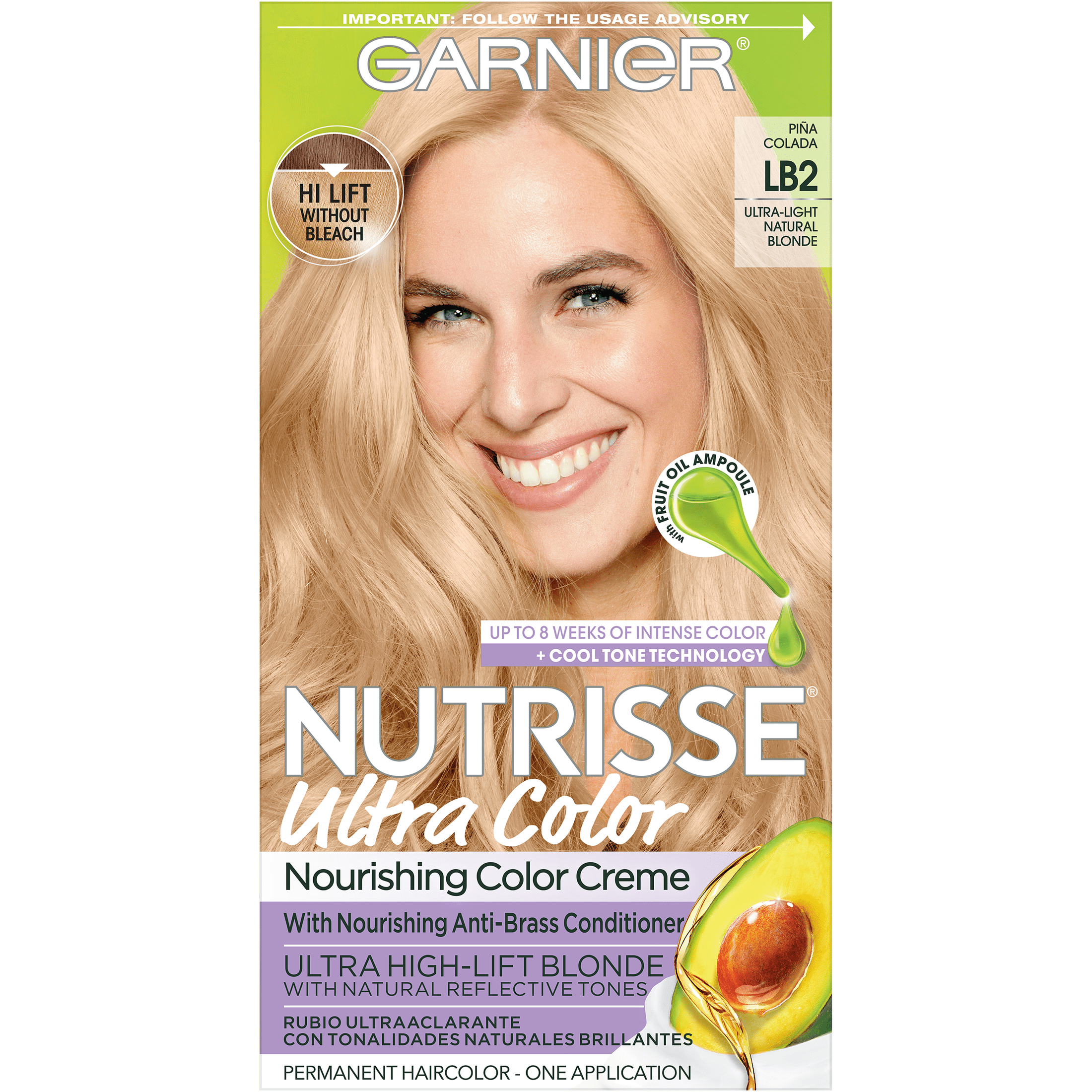
You’re standing in the drugstore aisle. It’s 11:00 PM on a Tuesday. The fluorescent lights are huming, and you’re staring at a wall of smiling models with impossible hair. Most of those boxes promise the world—shimmering highlights, triple-bond repair, "salon-quality" results—but you know the drill. Usually, you end up with hair that feels like straw and a color that looks nothing like the girl on the front. Honestly, Garnier Nutrisse is the one that actually sticks the landing most of the time. It isn't flashy. It isn't a "luxury" $30 kit from a fancy startup. It's just a reliable, oil-enriched cream that gets the job done without destroying your scalp.
I've seen people switch to expensive professional brands and come crawling back to Nutrisse because it’s predictable. In the world of DIY hair color, predictability is everything.
What's actually inside a box of Garnier Nutrisse?
Most people think all box dyes are basically the same chemicals in different packaging. Not really. Garnier Nutrisse stands out because of its "Nourishing Color Creme" formula, which leans heavily on fruit oils. We’re talking avocado, olive, and shea oils. While other brands might leave your hair feeling stripped and brittle, the inclusion of these lipids helps keep the cuticle somewhat intact during the oxidation process.
The chemistry is pretty standard at its core—alkalizing agents (usually ammonia) open the hair cuticle so the color molecules can get inside. But it’s the "triple oils" mixed into the cream itself, plus that iconic little grape seed oil ampoule you snap open and pour into the mix, that makes the difference. It smells like fruit, not just a chemistry lab explosion. That matters when you're stuck in a small bathroom for thirty minutes.
The gray coverage myth vs. reality
If you have stubborn grays, you know the struggle. Some dyes just "stain" the gray, leaving it looking like a weird, translucent pastel version of the color you wanted. Garnier Nutrisse is specifically formulated for 100% gray coverage. Because it’s a permanent color, it doesn't just sit on top; it anchors.
However, let’s be real. If you are more than 50% gray, you need to be careful with the "Fashion" shades. If you pick a vibrant red or a cool-toned plum on top of pure white hair, it’s going to be neon. Expert tip: mix a "Natural" shade (those are the ones ending in .0, like 50 or 60) with your chosen "Reflect" shade. It gives the color a base to grab onto. It’s a trick stylists use that most people don't realize they can do at home.
The "Ginger" and "Bleach" Problem
We need to talk about the Ultra Color line. If you have dark hair and you're trying to go blonde or vibrant red without bleach, Garnier Nutrisse Ultra Color is designed for that. It uses "color-boost technology" to lift dark bases. But—and this is a big but—it won't turn jet-black hair into platinum. Nothing will do that in one step without a professional.
If you use the Ultra Bleach D+++, it’s powerful. It can lift up to 8 levels. But it’s still bleach. You have to treat your hair with respect afterward. I’ve seen too many people fry their ends because they thought the "oil-infused" part meant the hair was invincible. It's not. It's just less damaging than the cheap stuff.
Why the "Nourished" part isn't just marketing
Ever notice how your hair feels better immediately after coloring with Nutrisse? That’s not a coincidence, and it’s not just the conditioner. The formula uses a blend of triglycerides that mimic the hair’s natural oils. When the cuticle is forced open by the dye, these oils fill in the gaps.
The conditioner that comes in the box is legendary. Seriously. People have been begging Garnier to sell the "Nourishing Conditioner" in full-size bottles for decades. It contains silicone (amodimethicone), which is great for sealing the hair after chemical treatment because it doesn't build up as heavily as other types. It leaves that "slip" that makes your hair feel like silk.
Avoiding the "Hot Root" disaster
One of the biggest mistakes people make with Garnier Nutrisse—or any permanent dye—is applying it to their whole head every single time. Stop. Just stop.
If you already have color on your hair and you’re just covering regrowth, only put the dye on the roots. If you put permanent dye on top of permanent dye every month, your ends will eventually turn muddy, dark, and brittle. This is called "over-processing." About five minutes before you’re ready to rinse, you can pull the color through to the ends just to refresh the tone. This keeps the hair healthy and the color looking multi-dimensional instead of like a flat helmet.
Choosing your shade (The numbers matter)
Ignore the name on the box. "Sweet Latte" or "Dark Chocolate" are just marketing fluff. Look at the numbers.
The first number is the level (1 is black, 10 is very light blonde). The second number (after the decimal) is the tone.
- .1 is Ash (cool, blue/green base to kill orange)
- .3 is Gold (warm, yellow base)
- .4 is Copper (orange base)
- .6 is Red
If your hair always turns "orange" when you dye it, you need a .1 shade (like 7.1 Latte). If your hair looks "flat" or "greenish," you need something with warmth like a .3 or .4. Understanding this basic color theory will save you a trip to the salon for a $300 color correction.
Real-world longevity
How long does Garnier Nutrisse actually last? It's permanent, so the color won't "wash out," but it will fade. Reds fade the fastest because the red molecule is the largest and has a hard time staying tucked under the hair cuticle. Brunettes stay vibrant the longest.
To make it last:
- Wait 48 hours before your first shampoo. Give the cuticle time to fully close.
- Use sulfate-free shampoo. Sulfates are basically dish soap for your hair; they strip the color right out.
- Rinse with cool water. Hot water re-opens the cuticle and lets the color molecules escape. It's annoying, but it works.
Actionable steps for your next DIY session
Don't just dive into the box. If you want it to look professional, you have to prep like a pro.
- The 48-hour rule: Don't wash your hair right before dyeing. The natural oils on your scalp act as a protective barrier against irritation.
- Sectioning is key: Divide your hair into four quadrants. Use clips. It feels extra, but it ensures you don't miss a giant patch at the back of your head.
- The hairline trick: Put a little bit of petroleum jelly or thick moisturizer around your hairline and on your ears. Nutrisse is pigmented; it will stain your skin if you aren't careful.
- Two boxes: If your hair is past your shoulders or very thick, one box is not enough. There is nothing worse than being halfway through your head and realizing you’re out of dye. Buy two. You can always save the second one for next month if you don't open the bottles.
- The Strand Test: Seriously. Do it. Especially if you're trying a new shade. Cut a tiny snippet of hair from a hidden area or just dye a small section near the nape of your neck. It’s better to hate a one-inch strip of hair than your entire head.
Garnier Nutrisse remains a staple because it balances cost with actual hair health. It’s accessible, it’s consistent, and it treats the hair as a living thing that needs moisture, not just a canvas for chemicals. Stick to the shade levels, respect the processing time, and don't skip the conditioner. Your hair will thank you.