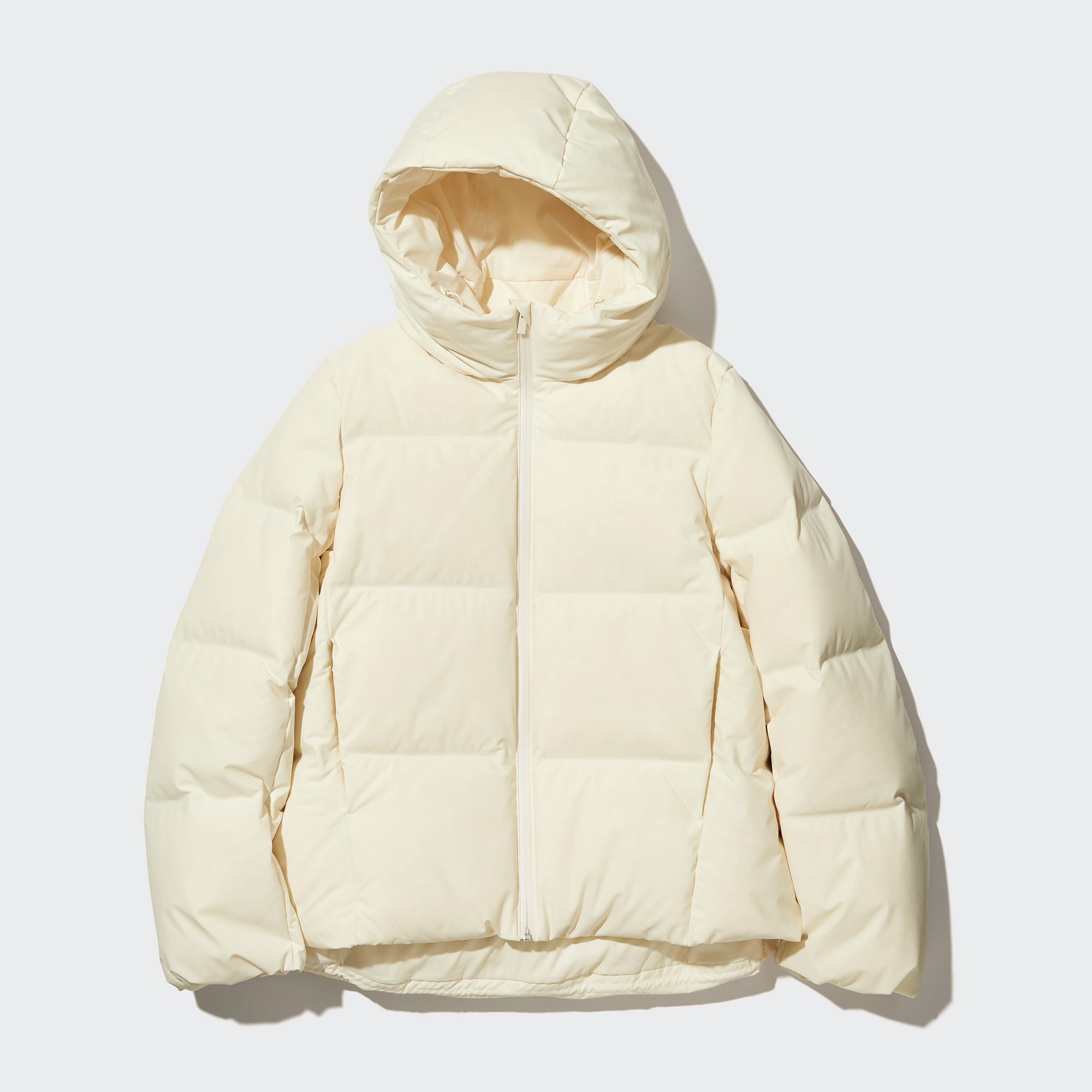
Winter gear is usually a choice between looking like a marshmallow or freezing your toes off. Most people just accept the trade-off. But for about a decade now, the Uniqlo seamless down parka has lived in this weird, specific niche where it promises technical-grade warmth without the "Michelin Man" aesthetic. It’s a staple. You see them on every subway platform from Tokyo to New York.
The thing is, "seamless" isn't just a marketing buzzword here. It’s a functional pivot. Standard down jackets use needles to stitch through the fabric to create those puffy baffles. Every time a needle punches a hole, it creates a point where wind can whistle through and down feathers can escape. Uniqlo basically said "no thanks" to that. They use a heat-bonding technique to create the channels.
Honestly, the result is surprisingly effective. It’s warmer than it looks. But after years of wearing these through actual blizzards and slushy commutes, I’ve realized there are things the product page doesn't tell you.
What's Really Under the Hood of the Uniqlo Seamless Down Parka?
Let's talk about the fill power. For the uninitiated, fill power is a measure of the "loft" or fluffiness of the down. The higher the number, the more air it traps, and air is what actually keeps you warm. The Uniqlo seamless down parka typically hovers around a 750+ fill power rating.
In the world of outdoor gear, 750 is respectable. It’s not "climbing Everest" levels of insulation—those jackets hit 900 or 1000—but for a $150 jacket? It’s punching way above its weight class.
The "seamless" part specifically addresses the biggest weakness of cheap down: cold spots. Because there are no stitch lines, the wind resistance is significantly higher. If you’ve ever felt a draft cutting through the seams of a regular puffer, you know how annoying that is. Here, the bonded strips keep the heat locked in much better.
But here is the catch. The bonding isn't permanent.
The Lifecycle of Heat-Bonded Tape
You have to be realistic about the tech. Since the baffles are held together by a special adhesive tape rather than thread, they have an expiration date. Uniqlo actually includes a disclaimer—usually on the inner tag—stating that the resin will naturally degrade over time. We're talking about a three to five-year window depending on how you store it.
If you leave it crumpled in a damp basement, that glue is going to give up faster. Once the bond breaks, the down starts shifting. Suddenly your "seamless" jacket has a giant lump of feathers at the bottom and nothing at the shoulders. It’s the trade-off for that sleek, windproof look.
Real-World Performance: Rain, Wind, and Sweat
Is it waterproof? No. Don't let anyone tell you otherwise. The outer shell has a durable water repellent (DWR) coating, which is great for a light drizzle or dry snow. The water just beads off. But in a heavy downpour? You’re going to get soaked.
Down is useless when wet. It clumps together and loses its ability to trap heat. If you live in a place like Seattle or London where "winter" is just a three-month rainstorm, you need a shell over this or you need to look at synthetic alternatives.
The Fit Factor
The silhouette is where Uniqlo wins. Most down jackets are boxy. This one has a slightly more structured, matte finish. It doesn't scream "I'm going hiking" when you're just trying to get to a nice dinner.
- The hood is surprisingly deep. It actually stays up in high winds.
- The pockets are lined with fleece. This is a small detail that feels like a luxury when you forget your gloves.
- The wrist cuffs are hidden. There’s an internal rib-knit cuff that keeps the wind from blowing up your sleeves.
The sizing can be a bit tricky, though. Since it’s a global brand, the "Japanese fit" vs "Western fit" debate is real. Usually, the US and EU versions are a bit roomier. If you want that sharp look, you might actually want to size down, but then you lose the ability to layer a heavy wool sweater underneath. It’s a balancing act.
Sustainability and Ethics in the Down Industry
We can't talk about down without talking about where it comes from. Uniqlo is part of the Responsible Down Standard (RDS). This means the down used in the Uniqlo seamless down parka is sourced from waterfowl that haven't been subjected to unnecessary harm, like live-plucking.
They’ve also made a push toward "Recycled Down" initiatives. You can actually bring your old Uniqlo down jackets back to the store, and they’ll process them to create new garments. It’s a better system than most fast-fashion outlets, though "fast fashion" as a whole still has a massive environmental footprint.
The shell is typically 100% nylon or polyester. It’s durable, but it’s plastic. If you’re trying to move away from synthetics, this isn't the jacket for you. But if you need something that lasts five years of heavy daily use, the durability of this specific nylon ripstop is hard to beat for the price.
Common Misconceptions About Maintenance
"Can I wash it?" Yes. "Should I wash it?" Rarely.
Every time you wash a down jacket, you risk stripping the natural oils from the feathers. If you must wash your Uniqlo seamless down parka, use a front-loading machine. Top-loaders with an agitator will destroy the bonded seams. Use a specific down detergent—not the harsh stuff you use for your jeans.
The secret is the dryer. You need to put the jacket in on low heat with three or four clean tennis balls. The balls act like little hammers, beating the down as it dries to prevent clumping. If you air-dry it, the down will dry in flat pancakes, and the jacket will be ruined.
Why it Dominates the Mid-Range Market
There are cheaper jackets at big-box retailers. There are much more expensive ones at boutiques. The Uniqlo seamless down parka sits right in the "Goldilocks zone."
Why? Because it doesn't look cheap. The matte fabric avoids that "trash bag" shine that plague lower-end puffers. The lack of stitching gives it a modern, minimalist vibe that fits into a professional wardrobe better than a North Face or a Patagonia might in certain contexts.
It’s the "Honda Civic" of outerwear. It’s reliable, it looks decent, and it does exactly what it says on the tin.
Practical Next Steps for Your Winter Wardrobe
If you are considering picking one up, don't wait until the first snowfall. They sell out of the neutral colors—black, navy, and olive—fast.
- Check the cuffs first. If the internal ribbing feels loose, try a different size; that's your primary heat-leak point.
- Test the zipper. Uniqlo uses YKK zippers, which are the gold standard, but the seamless model has a water-resistant coating on the zipper track that can feel "stiff" at first.
- Consider the "Light" version if you live in a climate that stays above 40°F (4°C). The full Seamless Parka is honestly too hot for mild winters.
- Store it on a hanger. Never leave it compressed in a stuff sack for long periods, or the down will lose its "memory" and stop lofting.
Maximize the lifespan of the jacket by spot-cleaning the collar with a damp cloth. Most of the "dirt" on a jacket is just skin oils and makeup around the chin guard. Keeping that clean will save you from having to put the whole garment through the stress of a washing machine cycle.
Ultimately, this jacket is for the person who wants technical performance without looking like they’re about to trek across the tundra. It’s a smart piece of engineering that acknowledges its own limitations while delivering exactly enough warmth for 90% of urban winter scenarios.