It was the white Supra. That’s what did it for most of us. When Brian O'Conner pulls up next to Dominic Toretto’s silver Dodge Charger at that final stoplight, the vibe isn’t about racing anymore. It's something else. You could feel the air leave the theater. Honestly, the Furious 7 ending scene shouldn’t have worked as well as it did, given the chaotic, tragic circumstances behind the camera. But it became one of those rare cinematic moments that transcended the franchise.
Paul Walker died in a car crash on November 30, 2013. He was only halfway through filming. The production hit a wall. Universal Pictures nearly scrapped the whole thing. How do you finish a high-octane action movie when your lead is gone? They used a mix of unused footage, CGI face-mapping from Weta Digital, and Paul’s brothers, Caleb and Cody, as body doubles. It was a massive technical gamble. If the Furious 7 ending scene felt "uncanny valley" or disrespectful, it would have tanked the entire series' legacy. Instead, it became a masterclass in how to say goodbye.
The Beach and the Realization
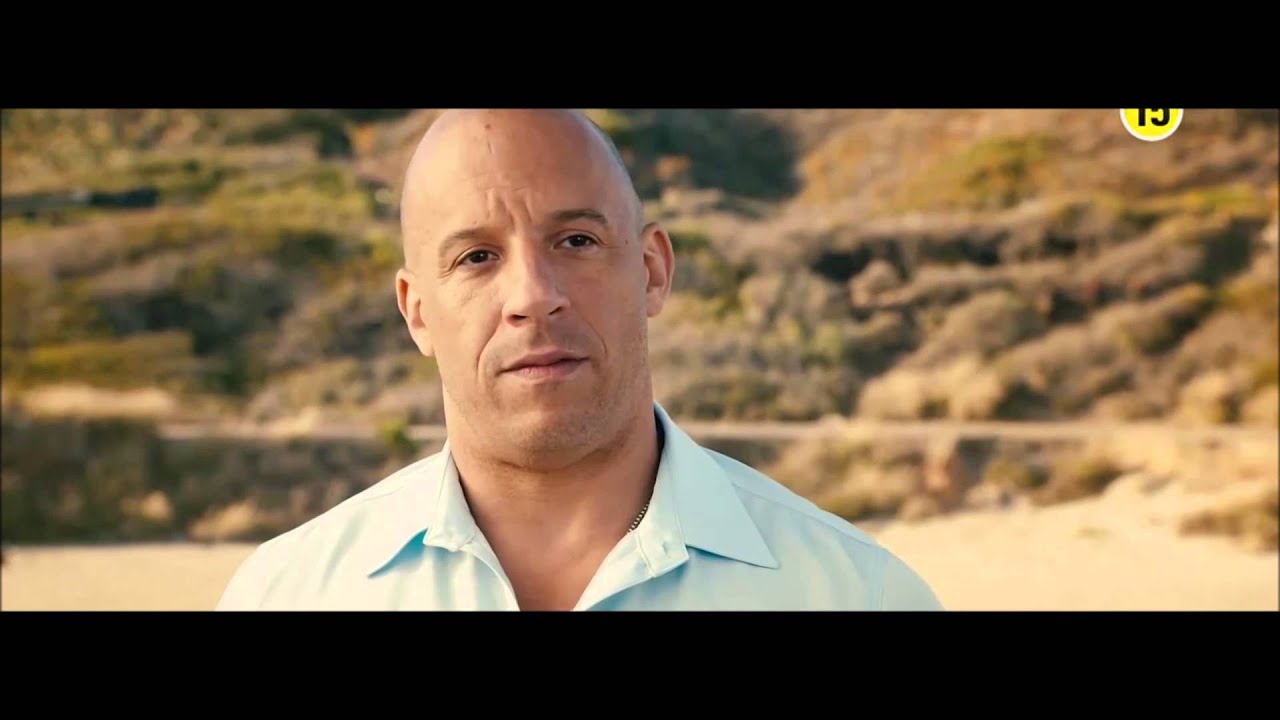
Before the cars ever start rolling, we’re on a beach in the Dominican Republic (though filmed in Malibu). The crew—the "family"—is sitting there watching Brian play with Mia and their son. Dom gets up to leave without saying a word. Letty asks why he isn't staying. Dom’s line is simple: "It’s never goodbye."
This is where the movie stops being a movie. Vin Diesel isn't just playing Dom here; he’s a guy who lost his "brother" in real life. The dialogue feels raw because the grief was real. While the rest of the film is filled with cars jumping between skyscrapers in Abu Dhabi and ridiculous drone strikes in Los Angeles, this specific moment is quiet. It's grounded. It acknowledges that Brian O'Conner deserves a "happily ever after" that the real world couldn't give Paul Walker.
Most action sequels would have killed the character off. A heroic sacrifice, maybe? That would have been the easy trope. But the writers, led by Chris Morgan, realized that killing Brian would be too painful for the fans and the family. So they retired him. They gave him the life Paul supposedly loved—the quiet one away from the noise.
Breaking Down the Visuals of the Final Drive
When Dom drives away, Wiz Khalifa and Charlie Puth’s "See You Again" starts to swell. Then, the white Toyota Supra appears. For the gearheads, that car choice was deeply personal. That wasn't just a random movie car; it was actually from Paul Walker’s personal collection.
They pull up side-by-side. No words. Just a look.
How They Pulled Off the CGI
It’s worth looking at the tech because it’s why the scene holds up. Weta Digital—the same folks who did Lord of the Rings—had to create a digital version of Paul’s face. They used about 350 shots of him from earlier films and outtakes to build a library of expressions. When you see Brian smiling at Dom in those final seconds, you’re looking at a digital performance layered over his brothers' physical movements. It’s subtle. It’s not perfect if you stare at it through a magnifying glass, but the emotional weight carries the technical load.
The road they’re driving on is Seven Mile Bridge in the Florida Keys for some shots, but the iconic fork in the road was filmed on Templin Highway in Santa Clarita, California. It’s a winding mountain road. As the song hits that crescendo, the two cars diverge. Dom stays on the main road. Brian’s white Supra veers off toward the horizon, climbing higher into the light.
The Cultural Impact of "See You Again"
You can't talk about the Furious 7 ending scene without the music. "See You Again" was commissioned specifically for this. It stayed at number one on the Billboard Hot 100 for 12 weeks. It wasn't just a radio hit; it became a global funeral anthem.
The lyrics mirror the franchise's evolution from a niche street-racing flick to a global phenomenon about "Family." When the screen fades to white and the words "For Paul" appear, it’s a gut punch. I remember sitting in a theater in 2015 where grown men were audibly sobbing. It broke the fourth wall in a way Hollywood rarely manages to do successfully. It turned the audience into part of the family.
Why This Scene Is Better Than the Rest of the Franchise
The Fast and Furious movies have gotten... weird lately. They’ve gone to space. They’ve fought submarines. They’ve basically become superheroes. But the Furious 7 ending scene is the last time the series felt human. It anchored the spectacle in a very real tragedy.
Some people argue the franchise should have ended right there. It was the perfect "out." Every movie since has had to deal with the awkward reality that Brian is "still alive" in the story but just happens to never show up when the world is ending. It’s a weird narrative limb to be out on. Yet, that ending remains untouchable. It’s a capsule of 2015 pop culture grief.
Interesting Facts About the Shoot:
- The final shot of Brian’s car driving into the distance was actually the very last thing the crew filmed.
- James Wan, the director known for horror (Saw, The Conjuring), had to pivot his entire style to handle this delicately.
- The production took a four-month hiatus after Paul’s death to figure out if they could even finish.
- The "See You Again" music video eventually became one of the most-viewed videos on YouTube, largely because it functioned as a memorial.
Understanding the Legacy
The Furious 7 ending scene works because it didn't try to be clever. It didn't have a twist. It was just a guy saying goodbye to his friend. Even if you hate the movies—if you think they’re loud, dumb, or unrealistic—you can’t deny the sincerity of those last five minutes.
It changed how Hollywood handles the death of an actor mid-production. Look at how Star Wars handled Carrie Fisher or how Black Panther handled Chadwick Boseman. There’s a "Post-Furious 7" blueprint for honoring a legacy without being ghoulish. It’s about focusing on the light rather than the loss.
If you’re revisiting the series, pay attention to the color grading in those final shots. Everything is overexposed and bright. It feels like a dream or a memory. That was intentional. It wasn't meant to look like a gritty street race. It was meant to look like peace.
Next Steps for Fans and Cinephiles
To truly appreciate the craftsmanship behind this moment, your next move should be watching the "making of" features regarding Weta Digital’s work on the film. It provides a fascinating look at how they used performance capture to honor Walker’s likeness without it feeling like a caricature. Additionally, listening to the isolated score by Brian Tyler reveals how he wove Paul’s original themes from the 2001 film into the final emotional beats. If you're ever in California, a drive through the Templin Highway area offers a quiet perspective on the geography of that final fork in the road—just keep it at the speed limit. The scene is a reminder that while movies are often just business, sometimes they become something much more personal for the people making them and the people watching.