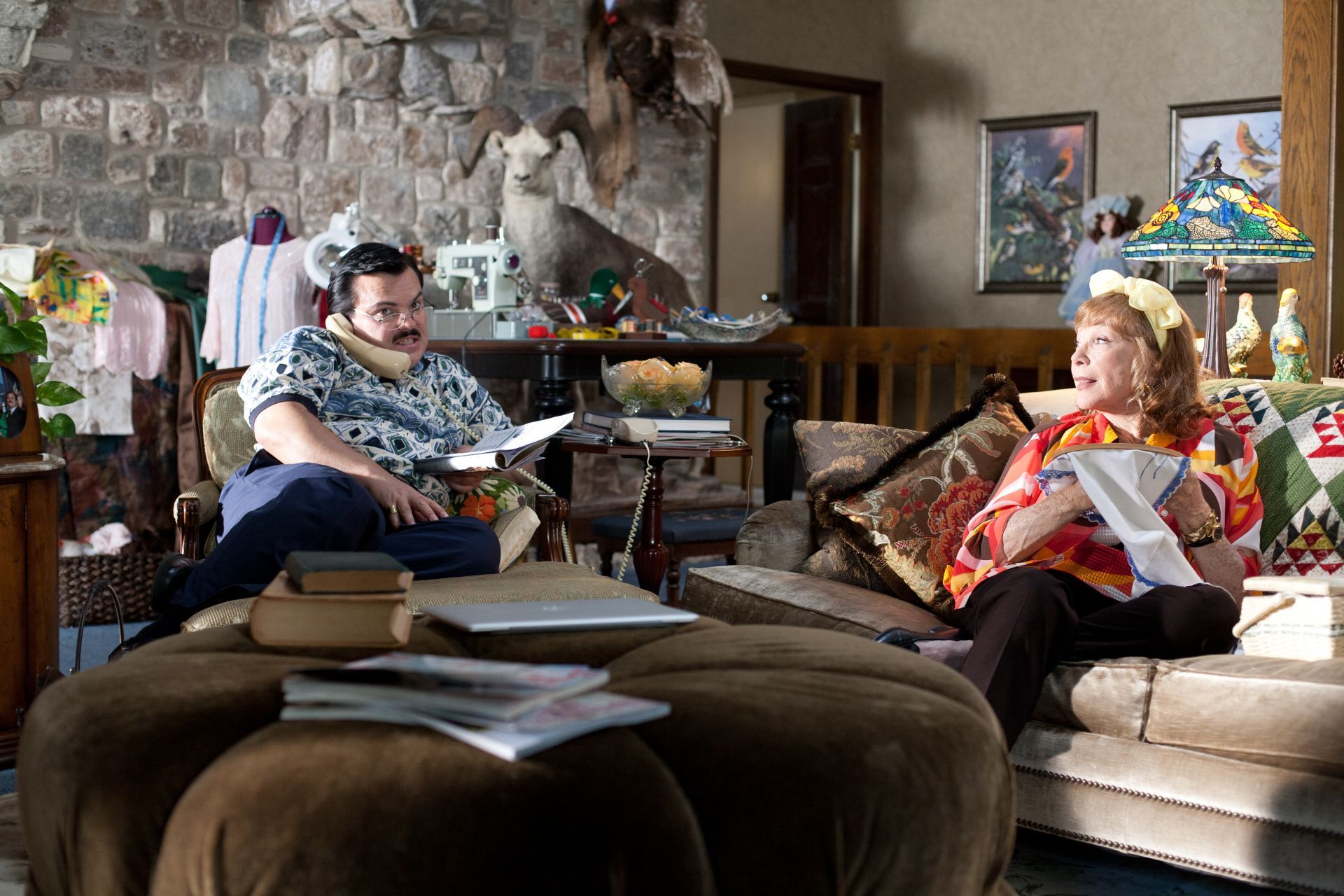
You’ve probably seen the posters or scrolled past it on a streaming service. Jack Black is wearing a short-sleeved dress shirt, looking uncharacteristically poised, standing next to a very stern-looking Shirley MacLaine. It looks like a quirky comedy. Maybe a bit of a farce. But the bernie jack black movie—officially titled Bernie (2011)—is actually one of the most bizarre "truth is stranger than fiction" stories in American legal history.
It’s not just a movie. It’s a case that actually changed the fate of a real man, for better or for worse.
Most people know Jack Black for his high-energy, eyebrow-dancing antics in School of Rock or Tenacious D. In Bernie, directed by the legendary Richard Linklater, he does something completely different. He plays Bernie Tiede, a soft-spoken, hyper-polite assistant funeral director in the tiny town of Carthage, Texas. Bernie was the kind of guy who would bring flowers to widows, sing high-tenor solos at church, and make sure every corpse looked like a "model" in their casket.
Then he shot a 81-year-old widow four times in the back and stuffed her in a freezer.
Why Everyone in Carthage Loved a Murderer
The movie uses a "mockumentary" style, but here’s the kicker: many of the "talking heads" you see on screen are real residents of Carthage. Linklater didn't just cast actors; he went to the town and interviewed the people who actually lived through the 1996 scandal.
Carthage is a place where gossip is the primary currency. Honestly, the way the locals talk about the victim, Marjorie Nugent (played by MacLaine), is almost as shocking as the murder itself. They hated her. They called her "meaner than a snake." Meanwhile, they worshipped Bernie.
- Bernie was the one who listened.
- Bernie was the one who cared.
- Bernie was the one who, quite literally, held the town’s hand during its darkest hours of grief.
This created a massive headache for the real-life District Attorney, Danny Buck Davidson. Matthew McConaughey plays him with a pitch-perfect East Texas drawl, and he captures the frustration of a prosecutor trying to seek justice for a woman nobody liked, against a killer everyone wanted to take to lunch.
The Reality Behind the Freezer Scene
In the bernie jack black movie, there is a moment where the facade cracks. After years of Marjorie's emotional abuse and controlling behavior—she reportedly made him clip her toenails and pluck her chin hairs—Bernie snaps. He grabs a .22 rifle and kills her.
He didn't panic and run. He didn't call the police. He put her in a chest freezer under some frozen pecans and corn.
For nine months, Bernie Tiede lived a double life. He told the town Marjorie was ill, or visiting relatives, or "having a bad day." During this time, he used her millions to fund local businesses, buy cars for friends, and renovate the church. He wasn't spending the money on hookers and blow; he was being the town’s Robin Hood.
This is where the movie asks a really uncomfortable question: If a "bad" person is killed by a "good" person who then uses the money for "good" things, does the town still want a conviction?
In the real trial, they actually had to move the case to a different county (San Augustine) because the people of Carthage were so biased in Bernie's favor that they couldn't find an impartial jury.
Life After the Credits: The Linklater Connection
Most people watch the movie, see Bernie go to prison, and assume that’s the end of it. It wasn't.
After the movie came out in 2011, it actually triggered a massive legal shift. A lawyer named Jodi Cole saw the film and started digging. She discovered evidence of childhood sexual abuse that Bernie had suffered, which wasn't fully explored in his original 1999 trial. She argued that this trauma, combined with Marjorie's abusive behavior, led to a "dissociative episode."
Because of the movie’s success and this new evidence, Bernie Tiede was actually released from prison in 2014.
The condition? He had to live in Richard Linklater’s garage apartment in Austin.
It sounds like a sequel, right? The director of the movie becomes the real-life guardian of the man the movie is about. For about two years, Bernie was a free man, working as a clerk for his lawyer and trying to stay out of the spotlight.
Where is Bernie Tiede Now?
If you're looking for a happy ending, the real story takes a dark turn. The Nugent family—Marjorie’s descendants—never stopped fighting. They felt the movie unfairly demonized Marjorie and glamorized her killer. They weren't about to let Bernie stay in Linklater’s garage forever.
In 2016, a new sentencing trial was held. The jury this time was not as sympathetic as the "town gossips" from the film. They heard about the premeditation—how Bernie had moved the rifle to a convenient spot weeks before the murder. They heard about the sheer amount of money he embezzled.
They sent him back to prison with a sentence of 99 years to life.
As of early 2026, Bernie Tiede remains incarcerated at the Estelle Unit in Texas. He isn't eligible for parole until August 3, 2029. He's recently been in the news for a lawsuit regarding the lack of air conditioning in Texas prisons, but for the most part, his life is a far cry from the first-class trips to Russia he took with Marjorie.
Actionable Insights for Fans of the Film
If you want to dive deeper into the world of the bernie jack black movie, skip the "making of" featurettes and go to the source.
- Read the Original Article: The movie is based on a 1998 Texas Monthly piece by Skip Hollandsworth titled "Midnight in the Garden of East Texas." It’s a masterpiece of long-form journalism.
- Watch for the Real Residents: When you re-watch the film, pay attention to the townspeople. Knowing that many of them are expressing their actual opinions about Marjorie and Bernie makes the dark humor feel a lot more "real."
- Check the Timeline: Remember that the movie covers events from 1990 to 1997, but the legal drama continued all the way through 2016. The "ending" you see on screen is only the midpoint of the saga.
The film stands as a rare example of how art can directly interfere with reality. Without Jack Black’s performance, Bernie Tiede would likely have died in prison without ever seeing Linklater's garage. Whether you think he’s a "sweet soul" who snapped or a calculating "con man," the movie remains the best way to understand the bizarre social fabric of East Texas.
Check out the original Texas Monthly archives if you want to see the crime scene photos and the actual confession—it’s even more chilling in print than it is on screen.