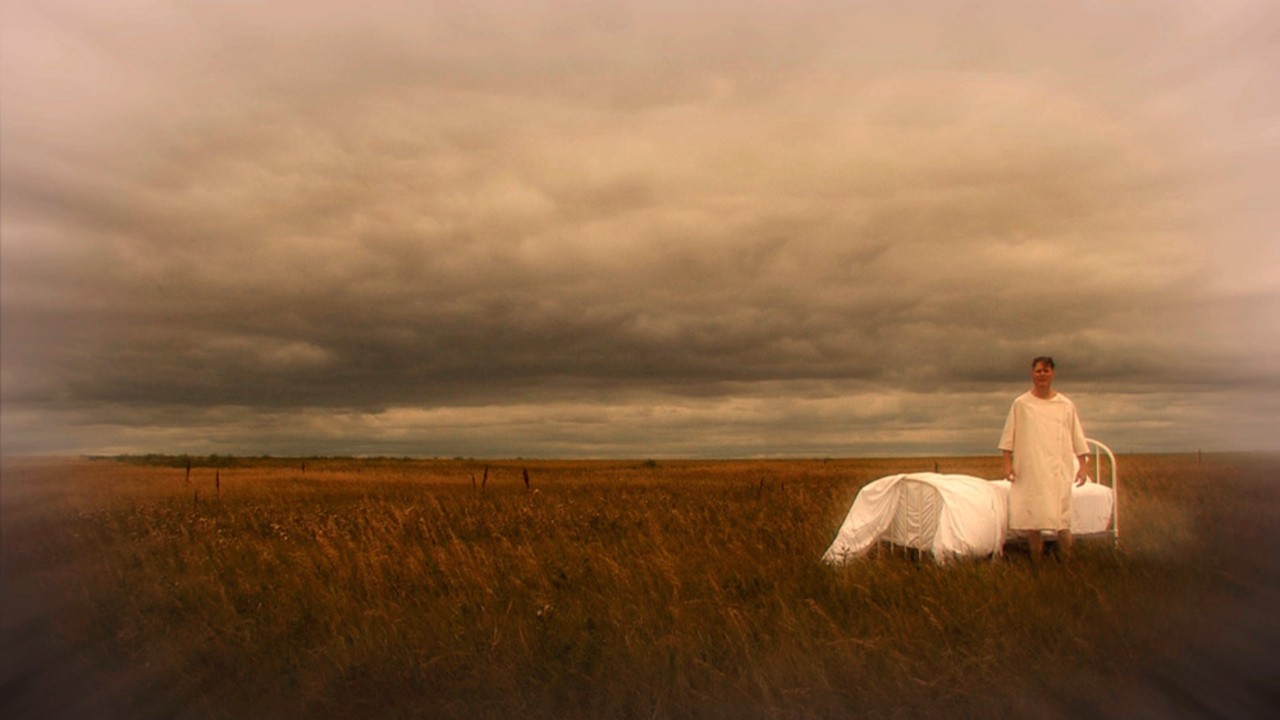
You’ve probably heard of the 2022 Finnish action flick Sisu where a lone prospector turns into a one-man army against the Nazis. It was great. High energy. Bloody. But that’s not the movie we’re talking about here. Long before the "John Wick in the wilderness" trope took over, there was a much quieter, far more haunting film that shared that same untranslatable Finnish title. I’m talking about Sisu: The Death of Tom Sukanen, a 1991 Canadian production directed by Chrystene Ells that explores a story so strange it sounds like a tall tale, even though it's bone-chillingly real.
It’s about a man building a ship in the middle of a desert. Literally.
Tom Sukanen was a Finnish immigrant in Saskatchewan during the Great Depression. While everyone else was praying for rain or fleeing the Dust Bowl, Sukanen was welding steel plates together under a blistering sun. He wasn't building a barn or a house. He was building the Sontiainen, a sea-going vessel he intended to sail back to Finland. The catch? He was hundreds of miles from the nearest ocean. Sisu: The Death of Tom Sukanen isn't just a biopic; it’s a fever dream about what happens when the human spirit breaks and turns into something indestructible, yet terrifying.
What Actually Happened to Tom Sukanen?
To understand the film, you have to understand the man. Tom Sukanen wasn't always the "crazy" guy in the prairie. He was a talented shipbuilder and a farmer who had a life in Minnesota before things went south. After a series of personal tragedies—including the death of his wife and the loss of his children to the state—he walked. He just walked north until he hit Saskatchewan.
The film captures this sense of displacement perfectly. It doesn't treat him like a hero in the traditional sense. It treats him like a ghost who hasn't realized he's dead yet. When the drought of the 1930s hit, Sukanen didn't give up. That’s where the "Sisu" comes in. It’s a Finnish concept that doesn't have a direct English equivalent, but it's basically guts, resilience, and a stubbornness so deep it's almost pathological. He decided he was going home. Since he couldn't walk across the Atlantic, he’d sail.
He spent years—honestly, years—toiling in the dirt. He built the ship in sections. He planned to haul it to the Saskatchewan River, float it to Hudson Bay, and then cross the ocean. It was a monumental feat of engineering. The movie shows the sheer physical toll this took. His neighbors thought he was insane. Some tried to help; others mocked him. Eventually, the state intervened. They put him in an asylum, and he died shortly after. He never saw the ocean again.
Why Sisu: The Death of Tom Sukanen is a Forgotten Masterpiece
Chrystene Ells didn't have a Hollywood budget. You can feel that in the grain of the film. It feels dusty. It feels parched. The cinematography reflects the claustrophobia of the open prairie, which sounds like a contradiction until you see it. The horizon is infinite, yet Sukanen is trapped.
The film uses a non-linear structure that confuses some people, but it’s intentional. It mirrors Sukanen’s fracturing mind. One moment he’s a young man full of hope; the next, he’s a skeletal figure dragging heavy metal through the dust. It’s a hard watch. It’s not a "feel-good" movie by any stretch of the imagination.
One of the most striking things about this version of the story is how it handles the silence. There isn't a bloated orchestral score telling you how to feel. You hear the wind. You hear the clink of tools. You hear the heavy breathing of a man who has nothing left but a delusional goal. It’s raw.
The Persistence of the Sukanen Myth
Despite being a niche independent film, Sisu: The Death of Tom Sukanen helped cement the legend of the "Ship on the Prairie" in Canadian folklore. If you go to Moose Jaw today, you can actually see the remains of Sukanen’s ship at the Sukanen Ship Pioneer Village and Museum. They moved his ship there and even moved his remains to a chapel on the site.
The movie serves as a cultural bridge. It connects the Finnish immigrant experience with the harsh reality of the Canadian Prairies. It’s about the cost of dreams. Most immigrant stories are about "making it." This is a story about losing everything and trying to build a way back to a home that doesn't exist anymore.
Misconceptions About the Film
People often get this film mixed up with other "prairie gothic" movies or the aforementioned 2022 action movie. Let’s clear some stuff up.
- It is not an action movie. If you go in expecting explosions, you’ll be bored to tears. It’s a psychological drama.
- It’s not a documentary. While based on true events, Ells takes artistic liberties to explore Sukanen’s internal state. It’s poetic, not just factual.
- It’s hard to find. This isn't on Netflix. It’s one of those films you have to hunt for in university libraries or specialty Canadian film archives.
The scarcity of the film adds to its mythos. It’s like the ship itself—something people talk about more than they actually see. But for those who have seen it, the image of that steel hull sitting in a field of dead wheat is impossible to forget. It’s haunting stuff.
The Reality of Sisu as a Concept
We use the word "resilience" a lot lately. It’s a buzzword. But "Sisu" is different. In the context of the film, Sisu is portrayed as a double-edged sword. It’s what kept Tom alive, but it’s also what isolated him. His refusal to accept his reality—that he was a broken man in a bankrupt land—is what made him a legend, but it’s also what killed him.
The film challenges the idea that "never giving up" is always a virtue. Sometimes, the thing you’re holding onto is the thing that’s pulling you under. Tom Sukanen’s ship was his salvation and his tomb.
Actionable Insights for History and Film Buffs
If you’re interested in this story or want to track down the film, here’s how you actually engage with this piece of history without getting lost in the weeds.
Visit the Sukanen Ship Pioneer Village and Museum
If you’re ever in Saskatchewan, skip the standard tourist traps and head to Moose Jaw. Seeing the actual scale of the Sontiainen puts the film into perspective. You realize that one man did this with hand tools. It’s terrifying when you stand next to it.
Research the Finnish "Sisu" Philosophy
To truly appreciate the nuances of the movie, read Sisu: The Spirit of Finland by Joanna Nylund. It provides the cultural context that the film assumes you already have. You’ll understand why Tom’s stubbornness wasn't just "crazy"—it was a deeply ingrained cultural trait.
Support Independent Canadian Archives
Films like Sisu: The Death of Tom Sukanen are at risk of being lost to bit rot or physical degradation. Support organizations like the National Film Board of Canada (NFB) or TIFF’s Film Reference Library. They are often the only reason these niche masterpieces still exist in a viewable format.
Compare the Myth to the Man
Read Tom Sukanen: Shipbuilder of the Prairies. It’s a more straightforward biographical account. Comparing the dry facts of his life to the stylized version in the film is a great exercise in understanding how we turn real people into symbols.
Tom Sukanen wasn't a hero in the way we usually think of them. He was a man who refused to sink in a place that had no water. That's the real legacy of the film. It forces you to look at your own "ships"—the things you’re building that might never sail—and ask yourself if you have the Sisu to keep welding anyway. It’s a grim, beautiful, and essential piece of cinema that deserves a spot in the conversation about the immigrant experience.
Next Steps for Deep Diving into Sukanen’s Legacy
To fully grasp the weight of this story beyond the screen, look up the archival photos of the original Sontiainen hull from the late 1930s. The visual discrepancy between the sleek, imagined ship in Sukanen's mind and the rusted, dirt-clogged reality of the actual vessel provides the most honest commentary on the film's themes. Additionally, exploring the "Prairie Gothic" film genre—specifically works like The Reflecting Skin—will help place this movie in its proper artistic movement, characterized by the use of the vast, empty landscape as a primary antagonist. This isn't just a story about a man; it's a study of how geography can dismantle the human psyche.