You've probably seen the blue and white tubes everywhere. Round Lab has basically taken over the K-beauty world, and for good reason—they don't fluff up their ingredient lists with junk. But when it comes to the Round Lab eye cream options, people usually get stuck. Do you go for the Birch Juice one that looks like a drink of water for your face? Or the Soybean one that feels a bit more "grown-up" and thick? It's confusing because, honestly, the marketing makes them both sound like magic.
They aren't magic. They're just very well-formulated topical treatments.
If you’re waking up with crepey skin under your eyes that makes your concealer look like cracked desert earth, you’re likely dealing with a moisture barrier issue. That’s where these Korean formulas thrive. Unlike many Western eye creams that rely heavily on aggressive retinols which can sting like crazy, Round Lab leans into "hanbang-adjacent" hydration and gentle firming.
The Birch Juice Reality Check
Let's talk about the Birch Juice Moisturizing Eye Cream first. If you live in a place with high humidity or you have oily skin, this is probably your soulmate. The star ingredient is Betula Platyphylla Japonica Juice. Sounds fancy, right? It’s basically birch sap.
Scientists have found that birch sap is packed with amino acids and minerals that mimic the skin's Natural Moisturizing Factors (NMF). When you pat this on, your skin recognizes it. It doesn't sit on top like a greasy slick. It sinks in. Fast.
I’ve noticed that people with milia—those annoying little white bumps—usually prefer this one. Why? Because it’s a "screencast" of hydration without the heavy esters that clog pores. It uses a multi-layered hyaluronic acid approach. We’re talking different molecular weights here. The big molecules stay on the surface to stop water from evaporating, while the tiny ones dive deeper to plump things up.
But here is the catch. If you are over 40 or have extremely dry skin, the Birch Juice version might feel like... nothing. You’ll put it on, it’ll disappear, and ten minutes later, you’ll be wondering if you forgot that step of your routine. It’s light. Maybe too light for some.
Why the Soybean Panthenol Eye Cream Is Different
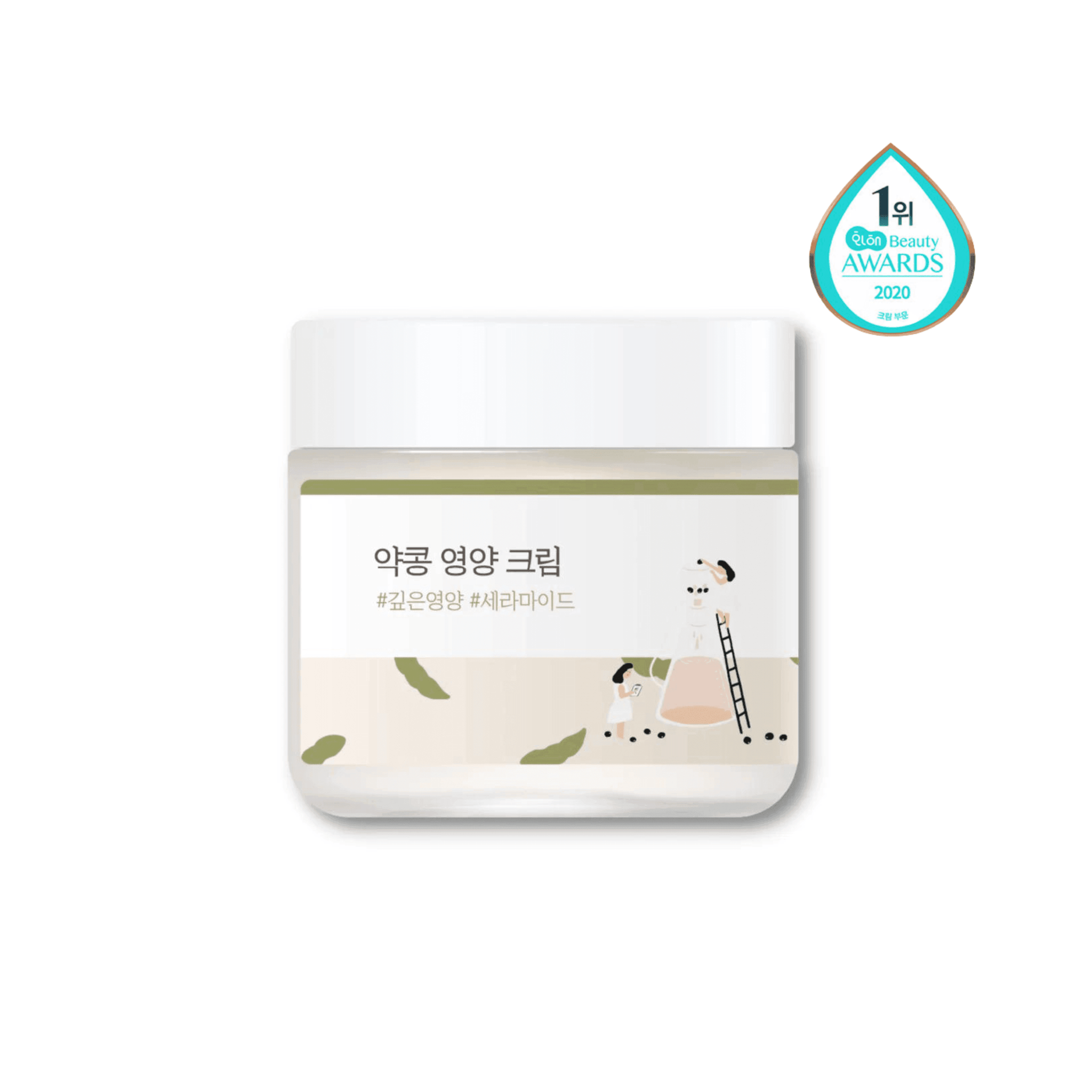
Now, the Soybean version is a different beast entirely. It’s dense. It’s nourishing. It feels like a hug for your eyes.
The core of this Round Lab eye cream is black soybean extract from Jeongseon. Why does the location matter? It doesn't, really, except that Jeongseon is known for high-altitude farming which supposedly makes the beans more nutrient-dense. What actually matters is the anthocyanins. These are antioxidants that help protect the thin, fragile skin around your eyes from environmental stress—think blue light and pollution.
But the real MVP here is the Panthenol (Vitamin B5).
Panthenol is a humectant, but it's also an emollient. It helps repair the skin barrier. If you’ve been rubbing your eyes because of allergies or using a makeup remover that’s too harsh, your barrier is likely trashed. The Soybean cream acts like a sealant. It’s got a "wrinkle-functional" certification in Korea, which usually means it contains Adenosine. Adenosine is a yeast-derived ingredient that functions as a good soothing and skin-restoring agent. It's proven to provide anti-wrinkle benefits by energizing the skin's surface.
Texture and Wearability
Let’s get real about the "pilling" issue.
Nothing ruins a morning like applying $50 foundation only to have it roll off your face in little grey balls because your eye cream didn't play nice.
- Birch Juice: Almost zero pilling. It’s a gel-cream. It behaves.
- Soybean: You have to be careful. Because it’s richer, you need to let it set for at least three minutes before hitting it with concealer. If you’re in a rush, use half of what you think you need.
The Ingredient Breakdown (No Fluff)
I looked at the COSMILY and INCIDecoder breakdowns for both. Neither uses synthetic fragrances, which is a massive win. The eye area is the thinnest skin on your body. Putting "Parfum" near your tear ducts is a recipe for redness.
The Soybean version uses Ceramides. If you don't know, Ceramides are the "glue" that holds your skin cells together. As we age, our bodies stop making as many. Replacing them topically is one of the few things skincare can actually do effectively. It also contains peptides. Specifically, a blend designed to support collagen production.
Will it get rid of genetic dark circles? No. Nothing in a tube will. If your dark circles are caused by thin skin showing the blood vessels underneath, the Soybean cream might help by thickening the appearance of the skin through hydration. If your circles are from hyperpigmentation, you need Vitamin C or Niacinamide (which the Birch Juice version actually has a decent amount of).
How to Actually Use It for Results
Most people use too much. A pea-sized amount is enough for both eyes.
Don't just swipe it on. Tap it. Use your ring finger—it’s the weakest finger, so you’re less likely to tug at the skin. Start from the inner corner and move outward. And here is a pro tip: take whatever is left on your finger and rub it into those "11" lines between your eyebrows or the nasolabial folds around your mouth.
Round Lab is known for their "clean" philosophy, but that doesn't mean "weak." It means they avoid the common irritants found in traditional prestige brands. No parabens. No sulfates. Just functional ingredients.
Common Misconceptions
People think "Natural" means "Safe."
Poison ivy is natural, but you wouldn't put it on your face. Fortunately, Round Lab's use of birch sap and soybean is backed by dermatological testing in Korea, which has some of the strictest cosmetic safety standards in the world.
Another myth? That you need a separate eye cream at all.
Honestly, if your face moisturizer is high-quality and fragrance-free, you can just use that. However, the reason to buy a specific Round Lab eye cream is the texture. They are specifically engineered to stay put and not migrate into your eyes, which causes that annoying blurry vision some heavy face creams produce.
The Verdict on Value
In terms of price per ounce, Round Lab is mid-range. It’s more expensive than some drugstore brands but significantly cheaper than the luxury stuff you see at Sephora. You're paying for the formulation stability and the quality of the extracts.
If you are dealing with puffiness, stick the Birch Juice tube in the fridge. The cold temperature combined with the sap's natural anti-inflammatory properties works wonders at 6:00 AM.
Next Steps for Your Routine
To get the most out of these products, you need to be consistent. Skincare isn't an overnight fix.
- Identify your primary concern. If it's dehydration and dullness, buy the Birch Juice Moisturizing Eye Cream. If it's fine lines and "hollow" looking eyes, go for the Soybean Panthenol Eye Cream.
- Patch test first. Even though they are formulated for sensitive skin, the high concentration of plant extracts can occasionally cause a reaction in some people. Apply a tiny bit behind your ear for 24 hours.
- Check the expiration. K-beauty products often list the manufacturing date rather than the expiration date. Look for the "EXP" symbol. Once opened, these are generally good for 12 months.
- Seal it in. Use your eye cream after your serum but before your heavy face oil or sleeping mask to ensure the active ingredients are closest to the skin.