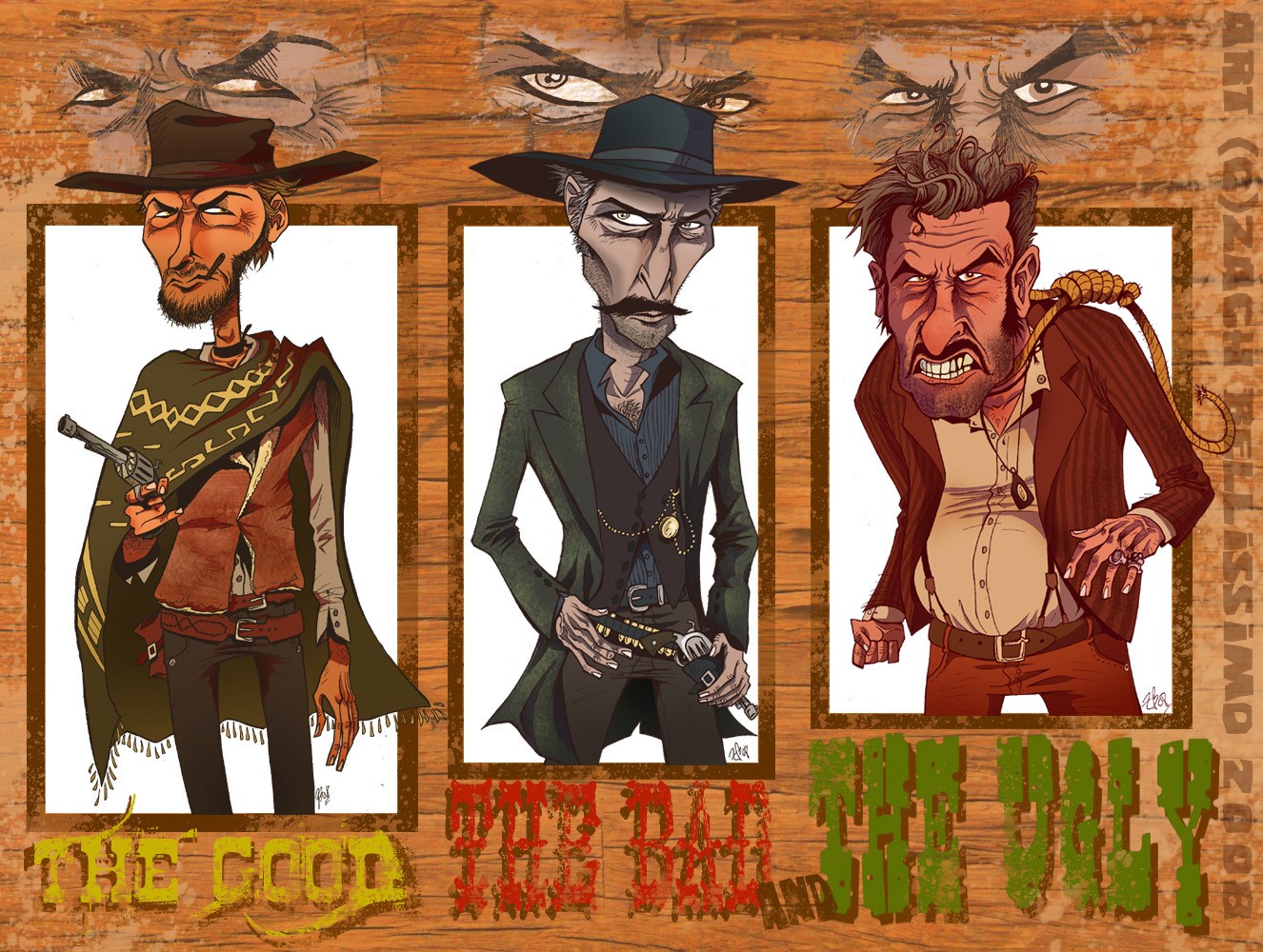
You know that feeling when a villain walks on screen and the temperature in the room just seems to drop five degrees? That’s Lee Van Cleef for you. Specifically, him as "Angel Eyes."
When we talk about Lee Van Cleef in The Good, the Bad and the Ugly, we aren’t just talking about a tall guy in a black hat. We’re talking about a man who redefined what it meant to be a movie "heavy." Sergio Leone didn’t just cast an actor; he cast a pair of eyes that looked like they’d seen the end of the world and weren't particularly impressed by it.
Honestly, the first time you see him in the film—the "Breakfast Scene"—it’s a masterclass in tension. He eats. He stares. He kills. It’s efficient. It’s cold. It’s basically the blueprint for every "professional" assassin character we've seen since.
The Man with the "Snake Eyes" and a Missing Finger
If you look closely during that legendary final three-way standoff—the one with the iconic Ennio Morricone score screaming in the background—you’ll notice something weird about Van Cleef’s right hand.
He’s missing the tip of his middle finger.
There were all these wild rumors back in the day. People said he lost it in a bar fight or a horrific car wreck. The truth? Kinda boring, actually. He lost it while building a playhouse for his daughter. But that missing joint added this strange, physical imperfection to a character who otherwise felt like a lethal machine. It made him look lived-in.
Van Cleef had a rough road to this role. By the early 1960s, his career was basically flatlining. He was doing guest spots on TV westerns like The Rifleman and The Lone Ranger, usually playing "Villain #3" who gets shot in the first ten minutes. He’d even considered quitting acting to become a painter or a freelance interior decorator.
Then Leone called.
From Hero to Heel: The Great Character Swap
What most people forget—or get confused about—is that Lee Van Cleef in The Good, the Bad and the Ugly was a complete 180 from his role in the previous film, For a Few Dollars More.
In that movie, he played Colonel Douglas Mortimer. He was a hero! Or at least, a man with a noble, tragic motive for revenge. He and Clint Eastwood were partners. They had chemistry. They respected each other.
So, when audiences sat down for the third film in the "Dollars Trilogy" (which wasn't even meant to be a trilogy at first, but let’s not get into that mess), they expected Van Cleef to be the "Good" guy again.
Leone had other plans.
He wanted to subvert everything. He took the man the audience had just learned to love and turned him into a sadistic mercenary who beats women and tortures Eli Wallach’s Tuco for information. It was a genius move. It made the world of the film feel dangerous and unpredictable. If the guy who was "good" last year is "bad" this year, nobody is safe.
Why Charles Bronson Almost Had the Job
Believe it or not, Lee Van Cleef wasn't the first choice for Angel Eyes. Leone actually wanted Charles Bronson.
Bronson turned it down because he was already busy filming The Dirty Dozen. It’s one of those "what if" moments in cinema history. Bronson would have been great—he was a powerhouse—but he didn't have that "sharp" look. Van Cleef had those high cheekbones and those slits for eyes. He looked like a hawk.
In the Italian version of the film, his character is actually named Sentenza, which translates to "Sentence" or "Judgment." It fits. When Angel Eyes shows up, your sentence has usually been carried out before you even realize you're on trial.
The Dynamic of the Trio
The movie works because the three leads represent three different types of "survival" in a war-torn world.
- Clint Eastwood (Blondie): The Opportunist. He has a code, but it’s a flexible one.
- Eli Wallach (Tuco): The Survivor. He’s chaotic, funny, and deeply human.
- Lee Van Cleef (Angel Eyes): The Professional. He does it for the money, and he doesn't miss.
Tuco is actually the heart of the movie, but Angel Eyes is the shadow that hangs over it. Even when he isn't on screen, you're waiting for him to show up. He doesn't waste words. He doesn't monologue about his childhood. He just arrives, kills the person he was paid to kill, and then kills the person who paid him—just to keep things tidy.
Making the "Bad" Rank on Google
If you're looking for why this performance is so enduring, it’s the lack of ego. Van Cleef never tried to out-act Clint Eastwood. He knew his face did half the work.
He once said that he liked playing villains because they were more complex. You’ve got to find the logic in a man who kills for a living. For Angel Eyes, that logic was simple: a job is a job.
Actionable Takeaways for Cinephiles
If you want to truly appreciate Lee Van Cleef in The Good, the Bad and the Ugly, try these three things during your next rewatch:
- Watch the eyes, not the gun: In the final standoff, Van Cleef’s eyes move less than Eastwood’s or Wallach’s. He’s the most still, which makes him the most intimidating.
- Listen to the silence: Notice how Leone uses silence before Angel Eyes speaks. It builds a vacuum that only he is allowed to fill.
- Check the wardrobe: He’s wearing a Union Sergeant's uniform for half the movie, yet he still feels like a total outsider. He doesn't belong to any army; he belongs to himself.
Lee Van Cleef went on to become a massive star in Europe because of this film. He starred in the Sabata movies and Death Rides a Horse, usually playing some variation of the "cool-headed gunslinger." But he never quite topped the pure, concentrated malice of Angel Eyes.
He died in 1989, just months after Sergio Leone. His gravestone in Forest Lawn Memorial Park actually says "BEST OF THE BAD."
You really can't argue with that.
To dive deeper into the world of Spaghetti Westerns, start by tracking the evolution of the "anti-hero" archetype from the 1960s to today. You'll find that almost every gritty protagonist or calculating villain in modern cinema owes a massive debt to the silence and precision Lee Van Cleef brought to the screen in 1966.