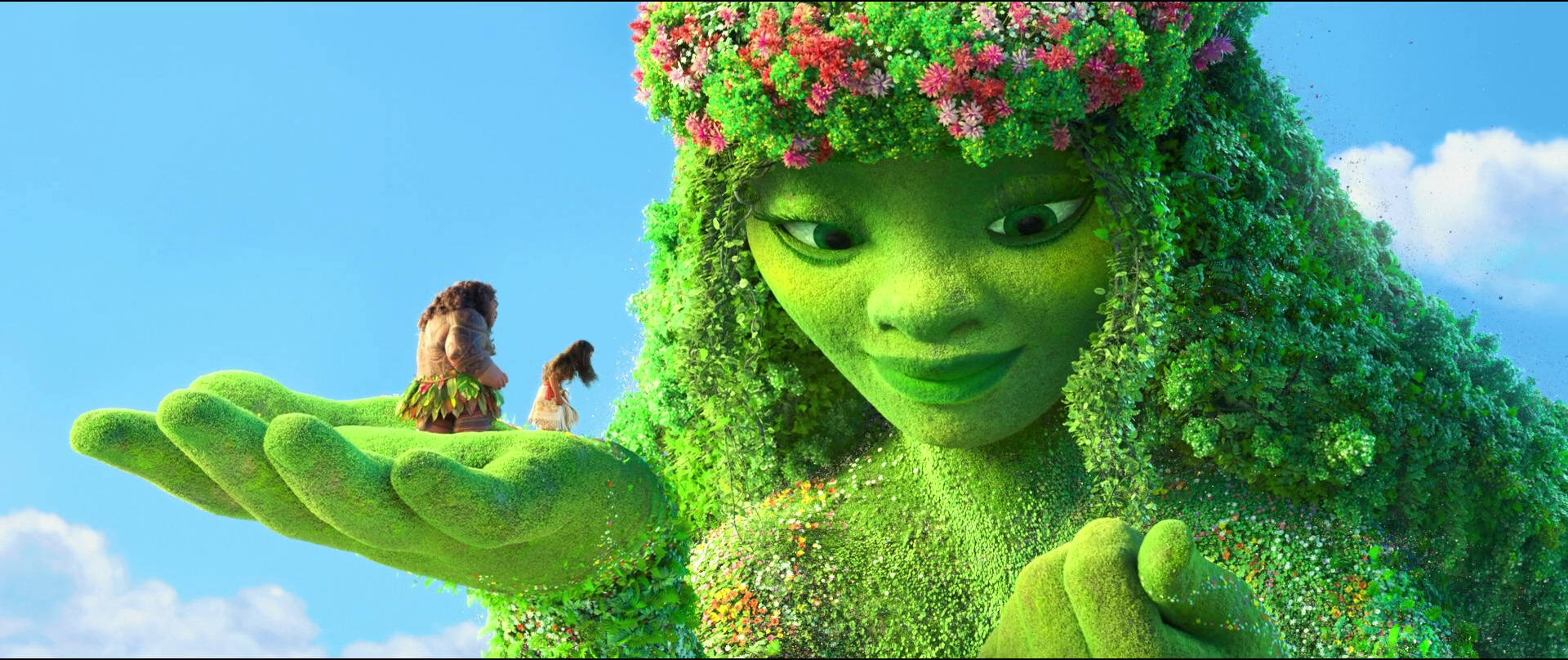
Most people think they know the island of Te Fiti from the 2016 Disney hit Moana. You’ve seen the lush green goddess, the heart-shaped stone, and the terrifying lava demon Te Kā. But if you try to punch "Te Fiti" into Google Maps, you're going to end up disappointed. There isn't an island with that exact name. Honestly, it’s a bit more complicated than just a fictional cartoon location.
The creators of the film didn't just pull this island out of thin air. They spent years traveling across the Pacific, visiting Fiji, Samoa, and Tahiti. They spoke with elders, linguists, and master navigators. What they built was a composite—a love letter to the geography and spiritual beliefs of the Polynesian people.
What inspired the island of Te Fiti anyway?
If you look at the physical profile of Te Fiti in the movie, it’s basically Tahiti. Seriously. Look at the jagged peaks of Moorea or the way the clouds hang over the emerald mountains of Tahiti Itti. It's almost a 1:1 match. Disney’s animation team specifically cited Tahiti as the visual foundation for the island. The "High Islands" of French Polynesia, which were formed by volcanic activity millions of years ago, provide that specific "shrouded in mist" aesthetic that defines the movie's climax.
But the name? That’s where things get interesting. In many Polynesian languages, "Fiti" refers to "far away" or is a variation of the word for Fiji. It’s a linguistic nod to the vastness of the Pacific and the way ancient voyagers categorized the world.
There's also a deep connection to the Māori goddess Papatūānuku. She is the Earth Mother. Just like Te Fiti, she is the source of all life. In Māori mythology, she is the land itself. When you see Te Fiti reclining to become the mountains, that isn't just a cool special effect. It’s a direct reference to the "Sleeping Lady" motifs found in Pacific folklore, where mountains are seen as the physical bodies of gods.
The Wayfinding mystery and the Long Pause
To understand the island of Te Fiti, you have to understand the "Long Pause." This is a real historical event that lasted for about a thousand years. For centuries, Polynesian explorers were the greatest navigators on Earth. They settled the western islands like Fiji and Tonga with ease. Then, suddenly, they stopped.
No one knows exactly why. For a millennium, they didn't push east into the heart of the Pacific. Then, about 2,000 years ago, they started again, eventually reaching Hawaii, Easter Island, and New Zealand. Moana uses the fictional "Heart of Te Fiti" as the reason for this pause, suggesting the people became afraid of the ocean. In reality, it might have been due to changing wind patterns or the need for better voyaging technology.
The island of Te Fiti represents that lost connection to the sea. It’s a symbol of the environmental balance that many Pacific cultures have preached for generations. When the heart is stolen, the island decays. This mirrors the real-world concept of Kaitiakitanga—the Māori word for guardianship of the environment. If you don't take care of the land, the land stops taking care of you. Simple as that.
Separating the movie from the mythology
Let’s be real: Maui is a massive figure in Pacific mythology, but Te Fiti is mostly a Disney creation. While the spirit of the island is based on Papatūānuku and Pelé (the Hawaiian goddess of fire), the specific name and the "Heart" mechanic were invented for the script.
- Pele vs. Te Kā: In the film, Te Kā is what happens when Te Fiti loses her heart. This looks a lot like Pele, the Hawaiian goddess of fire and volcanoes. Pele is known for her temper and her ability to create new land through destruction.
- The Heart of Te Fiti: There is no "heart stone" in actual Polynesian myths. However, greenstone (Pounamu) is incredibly sacred in Māori culture. It’s seen as a living thing with its own mana (power). This is likely where the visual idea for the green stone came from.
- The Geography: The film's "Motunui" is fictional, but it’s meant to look like a Tongan or Samoan village. Te Fiti, on the other hand, is the idealized version of the lush, mountainous islands of the east.
Why the island of Te Fiti matters today
Even though it’s a fictional place, the island of Te Fiti has become a cultural touchstone. It represents a shift in how indigenous cultures are portrayed in mainstream media. Disney actually formed the "Oceanic Story Trust," a group of cultural experts who vetted everything from the tattoos on Maui's skin to the shape of the boats.
This matters because, for a long time, Pacific islands were just "tropical paradises" in movies. They were backgrounds for white explorers. By centering the story on the island of Te Fiti and the restoration of nature, the film gave a voice to the actual ecological struggles facing these islands today. Rising sea levels and the "death of the reef" aren't just plot points in a movie for people living in Kiribati or Tuvalu—it’s their daily reality.
Finding your own Te Fiti
If you're looking for the closest thing to a real-life Te Fiti, you’ve got two main choices.
First, there’s Tahiti. It has the waterfalls, the black sand beaches, and the towering green spires. If you hike into the Papenoo Valley, you’ll feel like you’ve walked onto the set.
The second option is Samoa. The To Sua Ocean Trench feels like something straight out of the film's lush landscapes. It’s a natural swimming hole surrounded by hanging greenery. It’s magical.
Practical steps for your own Pacific exploration
You can't find Te Fiti, but you can find the culture that inspired it. If you're planning a trip to see the real-world roots of the story, don't just stay at a resort.
- Visit the Polynesian Cultural Center in Oahu. It sounds touristy, but they have sections dedicated to Fiji, Samoa, Tahiti, and Tonga that explain the differences in their voyaging traditions.
- Look for "Wayfinding" workshops. In places like Hilo, Hawaii, there are still traditional navigators who teach how to sail using only the stars, the waves, and the flight patterns of birds.
- Respect the Mana. If you visit sacred sites in the Pacific, remember that these aren't just "cool ruins." They are active spiritual sites. Don't take rocks (even "heart-shaped" ones) as souvenirs. In Hawaii, taking lava rocks is famously said to bring a curse from Pele.
- Support local conservation. Many of the "real" Te Fitis are under threat from climate change. Look into organizations like the Tetiaroa Society that work on preserving island ecosystems.
The island of Te Fiti might be a myth, but the message is pretty grounded. Life comes from the earth, and we're just the ones tasked with keeping it alive. Whether you're in the middle of the Pacific or in a suburban backyard, that's a philosophy that actually works.
Go see the islands for yourself. Just leave the "Heart" where you found it.