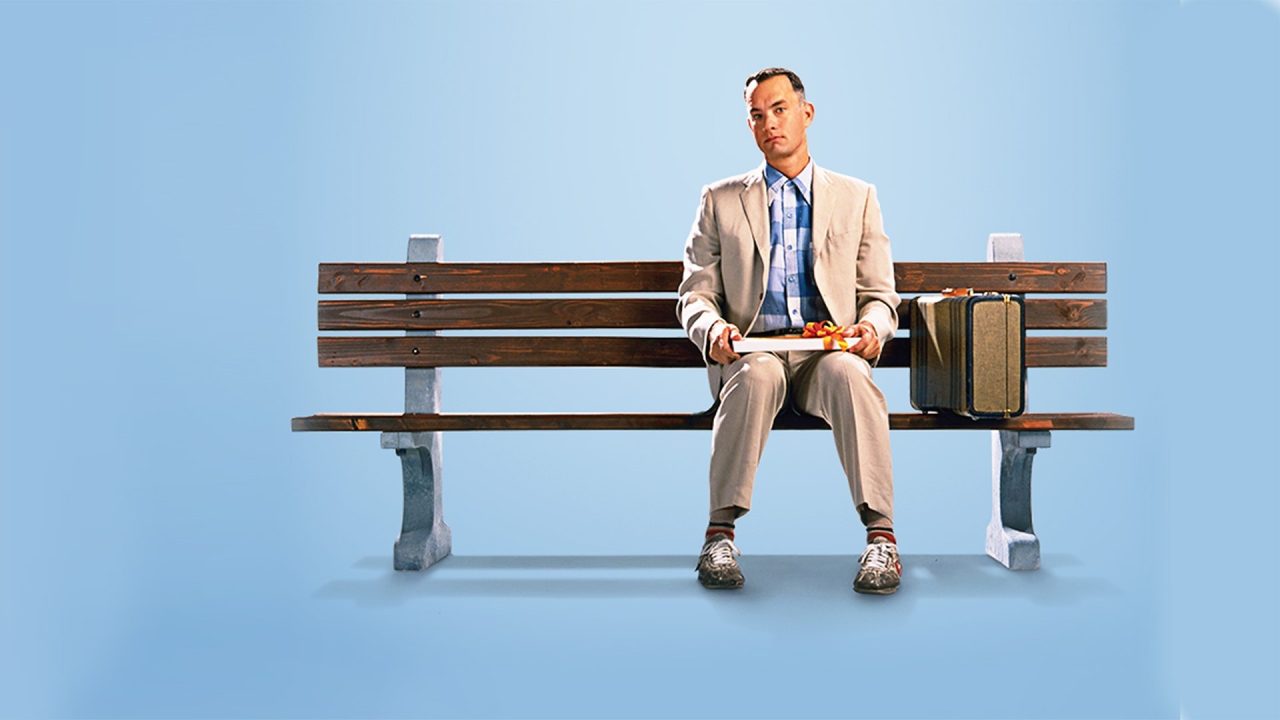
When you think of Forrest Gump, you probably picture the clean-cut guy on the bus bench. He’s got that short "high and tight" haircut and a crisp checkered shirt. But there’s another version of him that’s arguably more iconic. It’s Forrest Gump with long hair, beard down to his chest, running across a desert highway with a swarm of people following him.
That image is burned into our collective brain. It’s the visual peak of the movie. But honestly, why did he let it all go? Why the hair? Why the beard? Why the three-year marathon?
It wasn't just a style choice. It was a physical manifestation of a man trying to outrun a broken heart.
The Timeline: 3 Years, 2 Months, 14 Days, and 16 Hours
Forrest didn't just wake up with a mane. The movie is incredibly specific about the timeline. He starts running on October 1, 1979. We know this because he passes a cafe where a radio announcement mentions President Jimmy Carter collapsing from heat exhaustion—a real event that happened on that exact date.
He starts out looking like the Forrest we know: short hair, Bubba Gump hat, red shorts. Then, the montage kicks in.
- The First Year: He hits the Santa Monica pier. His hair is shaggy, his face is scruffy. He looks like a guy who’s been camping for a week too long.
- The Second Year: He’s crossing the grain fields and the Rockies. Now he’s got the full "mountain man" look. The hair is shoulder-length.
- The Finale: By the time he reaches Monument Valley in Arizona, he’s a different person.
That specific time—3 years, 2 months, 14 days, and 16 hours—isn't just a random number. It covers the transition from the late '70s into the early '80s. By the time he stops, it's 1982. The world had changed, and so had his hair.
What Forrest Gump With Long Hair Actually Represents
Most people think Forrest was running for something. The people in the movie certainly did. They thought he was running for world peace, or the environment, or women's rights.
But Forrest was just... running.
The long hair is a symbol of time and neglect. Not neglect in a bad way, but a total lack of vanity. Forrest didn't care how he looked because he was completely focused on the internal process of "putting the past behind him."
When Jenny left him (again) in the middle of the night, Forrest felt a kind of pain he couldn't process by sitting still. The growth of his hair and beard acts like a clock. You can literally see the months of grief piling up on his face. The longer the hair gets, the further he has traveled from the moment of his heartbreak.
The "Moses" Connection
There’s a lot of talk about the religious imagery here. When Forrest stops running in the middle of the road, his followers part for him like the Red Sea. With the long hair and the beard, he looks like a biblical prophet.
The irony? He has no prophecy to give. He’s just a guy who’s "pretty tired" and wants to go home.
Behind the Scenes: Making the Hair Look Real
You might wonder if Tom Hanks actually grew that beard. Spoilers: he didn't.
Growing a beard of that magnitude would have taken years, and movie schedules don't work like that. The makeup team, led by Daniel Striepeke, had a massive challenge. Because they were filming out of order and across various locations (like the famous "Forrest Gump Curve" at Grandfather Mountain), they had to use sophisticated prosthetics.
- Hand-Laid Beards: The makeup artists didn't just slap on a fake beard. They hand-laid the hair piece by piece. This allowed it to move naturally while Tom was actually running.
- Weathering: The wig and beard had to look "road-worn." They used various oils and dirt-mimicking products to make the hair look like it had been exposed to the elements for three years.
- The Weight: Imagine running in the heat with a thick, polyester-blend beard and long hair wig. It was itchy, hot, and heavy.
The Real-Life "Forrest" Who Actually Did It
It sounds impossible, right? Running back and forth across America five times?
Well, a British man named Rob Pope actually did it in 2016. He became the first person to recreate the entire Gump route. He ran over 15,000 miles. And yes, he grew the hair and the beard to match.
Rob mentioned in interviews that the hardest part wasn't necessarily the running—it was the "Gump-calling." Everywhere he went, people would scream "Run, Forrest, run!" at him. Having the long hair made him an instant target for the reference.
Actionable Takeaways from the "Running" Phase
Even if you aren't planning to grow a three-foot beard or run to the Pacific, there’s a lot to learn from this specific era of Forrest’s life.
- Process Your Grief Your Way: Forrest didn't go to therapy or write a journal. He moved. Physical activity is a scientifically proven way to process emotional trauma.
- Ignore the "Why": People will always try to assign a "why" to your actions. You don't owe anyone an explanation for your personal growth or your choices.
- Know When to Stop: The most powerful part of the long hair sequence isn't the running; it's the moment he stops. He realizes he's done. He doesn't keep running just because people are watching. He stops because he’s finished what he needed to do for himself.
If you're looking to recreate the look for a costume, don't settle for a cheap "Jesus" wig. Look for a textured, hand-washable synthetic wig and use a bit of matte hair wax to give it that "just ran through Nebraska" grit. Pair it with the yellow V-neck, red shorts, and the essential Bubba Gump hat.
The hair isn't just a costume—it's the visual proof that Forrest Gump survived the hardest part of his life.