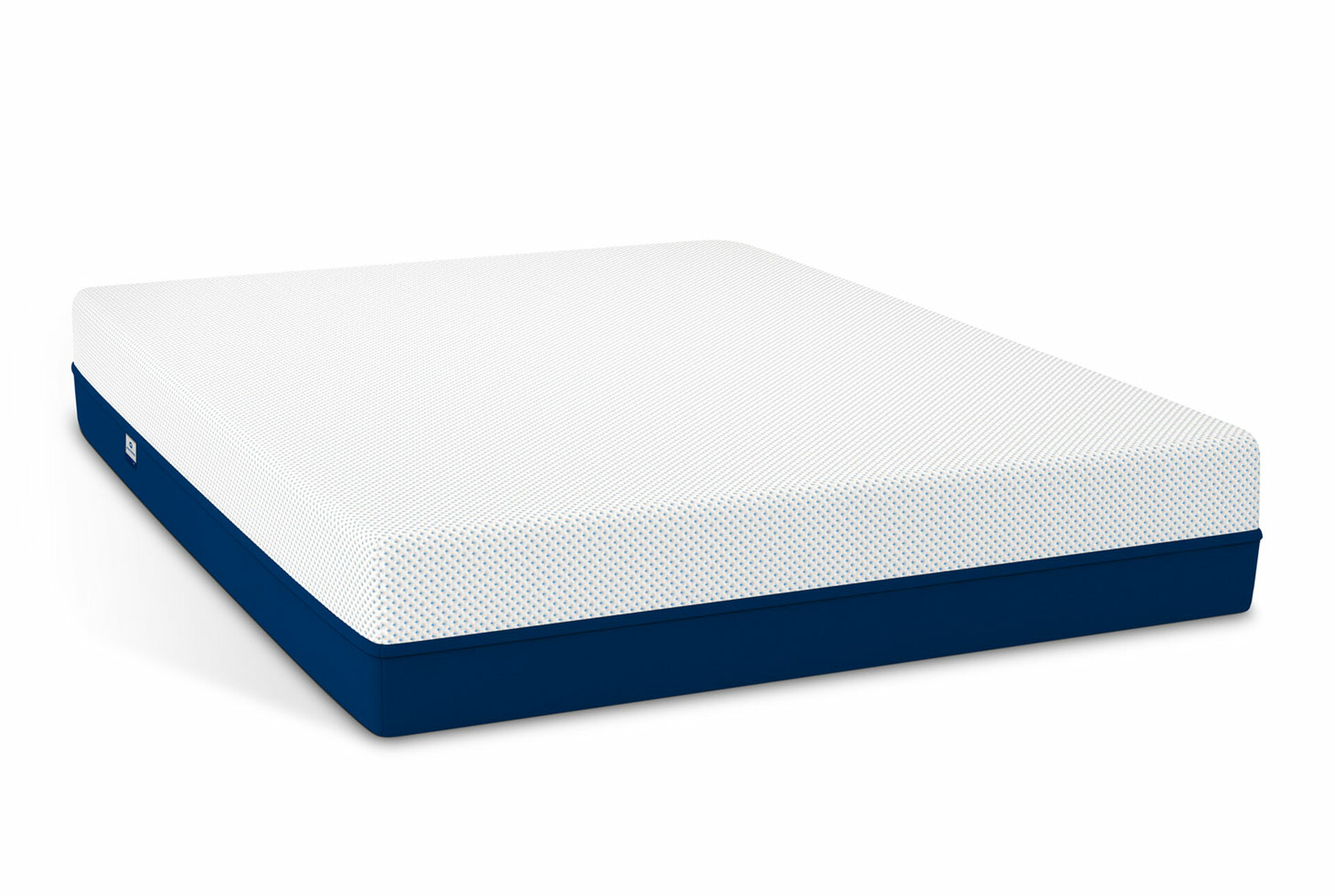
Let’s be real. If you weigh 400 pounds, most mattress reviews are basically useless to you. You see these "Top 10" lists written by 150-pound influencers who barely make a dent in the foam, and they’re telling you a bed is "supportive." It’s not. For them, maybe. For you? It’s a literal sinkhole waiting to happen. Finding a mattress for 400 pound person isn't just about comfort; it's about structural integrity and not waking up with a back that feels like it’s been through a trash compactor.
Standard mattresses are built for the "average" sleeper, which the industry usually defines as someone between 130 and 230 pounds. When you double that weight, the physics of foam and springs change completely. You aren't just lying on the mattress; you are exerting significant pressure that compresses layers all the way down to the core. If that core is weak, the bed fails. It's that simple.
I’ve seen people spend $2,000 on a big-name brand only to have a massive "valley" develop in the middle of the bed within six months. The warranty usually won't cover it either, because they’ll claim a 1.5-inch indentation is "normal wear." It’s frustrating. It’s expensive. And honestly, it’s a waste of money if you don't know what specs to actually look for.
The Myth of the "Extra Firm" Mattress
Most people think that if they’re heavier, they need the hardest mattress possible. Like sleeping on a floor.
That is actually terrible advice.
Firmness and support are two totally different things. Firmness is how the top layer feels against your skin—soft, medium, or hard. Support is how the base of the mattress keeps your spine aligned. You can have a very soft-feeling mattress that is incredibly supportive, and you can have a rock-hard mattress that sags the moment you lay down because the springs are cheap.
If you get a bed that’s too firm, you’ll end up with massive pressure points on your hips and shoulders. For a sleeper at 400 pounds, those pressure points can lead to poor circulation and tossed-and-turned nights. You need a comfort layer that actually contours to your body, but it has to be backed up by a "heavy-duty" support system. Think of it like a truck suspension. You want a smooth ride, but you need the heavy-duty shocks to handle the load.
Why High-Density Foam is Your Best Friend (And Your Worst Enemy)
Foam is where most mattresses fail for plus-sized sleepers. Specifically, low-density polyfoam.
When you see a cheap foam mattress, the foam is basically full of air bubbles. It feels great in the showroom. But under 400 pounds of constant pressure, those air bubbles collapse. Once they collapse, they don't spring back. This is how you get that permanent body impression that makes you feel like you’re trapped in a hole.
If you are looking at a foam or hybrid mattress for 400 pound person, you have to look at the density numbers. Don't let the salesperson gloss over this. You want polyfoam that is at least 1.8 lbs per cubic foot, but ideally 2.0 lbs or higher. If it’s memory foam, you need 4 lb to 5 lb density. Anything less will turn into a pancake within a year.
Latex is a different beast entirely. Natural Talalay or Dunlop latex is arguably the most durable material on the market. It’s naturally bouncy and doesn't "set" like memory foam does. It’s also much cooler. If you’ve ever felt like you’re roasting alive in a memory foam bed, that’s because the foam is trapping your body heat. Latex breathes. It's expensive, yeah, but it lasts twice as long as synthetic foams.
The Engineering of Heavy-Duty Coils
If you prefer an innerspring or hybrid, the coils are everything. You can't just have standard pocketed coils. You need "low-gauge" coils.
In the wire world, a lower gauge number means a thicker wire. Most standard mattresses use 14 or 15-gauge coils. They’re thin. They’re springy. They’re weak. For a 400-pound sleeper, you should be looking for 12.5 or 13-gauge coils. These are much thicker and can withstand much higher compression without deforming.
Some brands, like WinkBeds with their "Plus" model or Titan by Brooklyn Bedding, specifically use these reinforced coils. They often add a "zoned" support system where the coils in the middle third of the bed—where your hips sit—are even stronger. This prevents the "hammocking" effect where your midsection sinks lower than your head and feet, which is the primary cause of lower back pain.
Edge Support: The "Slide-Off" Factor
Have you ever sat on the edge of a bed to put your socks on and felt like the mattress was just going to dump you onto the floor? That’s poor edge support.
For a larger individual, edge support is a safety issue and a usability issue. If the edges are weak, the "usable" surface of the mattress shrinks. You end up huddling in the center of the bed because if you move too close to the side, the mattress collapses.
Look for mattresses that have a dedicated perimeter of extra-firm foam or thicker coils around the edges. A high-quality mattress for 400 pound person will allow you to sit on the very edge without it dipping more than an inch or two. This also makes it much easier to get in and out of bed, which can be a literal struggle if you're sinking into a soft edge.
Temperature Regulation and Heat Trapping
Let's talk about the "sweat factor." It’s not fun, but it’s a reality. Larger bodies generate more heat, and when you sink further into a mattress, more of that mattress wraps around you, trapping that heat.
Traditional memory foam is the worst offender here. It uses your body heat to soften and mold to your shape. It’s basically a heat sponge.
To stay cool, look for:
- Phase Change Material (PCM): These are fabrics or coatings that feel cold to the touch.
- Copper or Gel Infusions: These help pull heat away from the body, though their effectiveness is sometimes debated.
- Hybrid Construction: Having a coil layer allows for airflow. All-foam beds have almost no airflow.
- Latex: As mentioned, it’s naturally more breathable.
Real Examples of Beds That Actually Work
There are a few brands that have actually done the work to build beds for higher weight capacities. They aren't just marketing fluff.
- The Big Fig: This is basically the OG of plus-size mattresses. It was engineered specifically for people up to 550 pounds (or 1,100 pounds per couple). It uses high-density foams and 1,600 individually wrapped coils. It’s very firm, so if you like a "cloud" feel, you might need a topper, but for pure support, it’s hard to beat.
- Titan Plus Luxe: This is a hybrid that balances that heavy-duty support with a bit more "give." It’s a good choice for side sleepers who need that pressure relief on their shoulders but still need the 13.5-gauge coils to hold them up.
- Saatva HD: This is a luxury heavy-duty bed. It uses 12.5-gauge tempered steel coils—which are incredibly thick—and a layer of natural latex. It feels like a high-end hotel bed but built like a tank.
Don't Forget the Foundation
You can buy the best mattress in the world, but if you put it on a cheap, slatted IKEA frame, it’s going to fail.
Standard box springs and thin wooden slats aren't designed to hold 400 pounds plus the weight of a heavy-duty mattress (which can weigh 150 lbs on its own). You need a reinforced steel frame or a solid platform base. If you use slats, they should be no more than 2 inches apart. Anything wider and the mattress will start to ooze through the gaps, causing it to sag and ruining the warranty.
Many people overlook the "center support" leg. Ensure your frame has a sturdy center support that touches the ground. Without it, the whole bed will eventually bow toward the middle.
How to Test a Mattress Properly
If you go to a store, don't just sit on the edge for thirty seconds. That tells you nothing.
Lie down in your actual sleeping position. Stay there for at least 15 minutes. It sounds awkward, but you need to see if your hips start to dip after the foam warms up. Feel for whether your spine stays neutral. If you feel your lower back arching or straining, the bed isn't supportive enough.
Also, check the return policy. Most online brands offer a 100-night trial. Use it. It takes your body about 30 days to adjust to a new sleeping surface anyway. If a company doesn't offer a solid trial period, walk away.
Actionable Steps for Your Search
- Check the Weight Limit: Explicitly ask or look for the weight capacity per sleeper. If it isn't listed, it’s probably the standard 250 lbs.
- Inquire About Foam Density: If the manufacturer won't tell you the pcf (pounds per cubic foot), assume it’s low quality.
- Look for "Zoned Support": This helps keep your spine aligned by providing extra firmness where you need it most.
- Prioritize Hybrids or Latex: These generally offer better longevity and cooling than pure polyfoam or memory foam beds.
- Invest in a Heavy-Duty Base: Your mattress is only as good as what’s underneath it. Steel is your friend here.
- Read the Warranty Fine Print: Look for how deep an indentation must be to trigger a replacement. For heavy-duty beds, you want a warranty that covers sags of 1 inch or less.
Choosing a mattress when you're 400 pounds is about moving past the aesthetics and looking at the "bones" of the bed. It’s an investment in your health and your daily energy. Don't settle for a bed that was made for someone half your size.