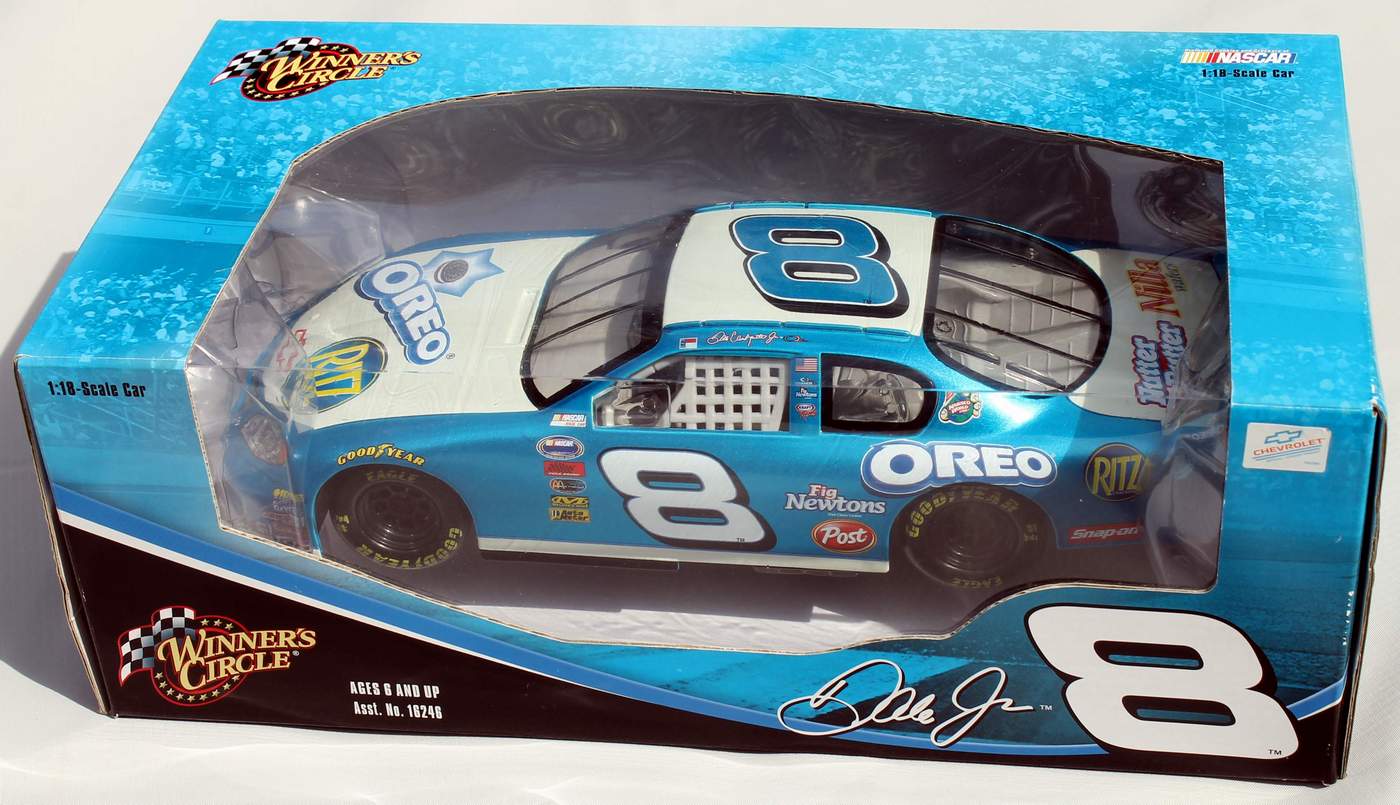
If you close your eyes and think of Dale Earnhardt, you see the black No. 3. It’s the "Intimidator" in all its GM Goodwrench glory. But for a few chaotic days in early 2001, the black was traded for something much lighter. We’re talking about the Dale Earnhardt Oreo car, a machine that was supposed to be a fun marketing crossover but ended up becoming a bittersweet footnote in racing history.
Honestly, most casual fans mix this car up with the ones Dale Jr. drove. It makes sense. Junior made the Oreo and Ritz brands famous on the Busch Series circuit for years. But the original? That was Senior’s project. It was a deal meant to bridge the gap between "The Intimidator" and the next generation of the Earnhardt legacy.
The Bud Shootout and the "One Tough Cookie"
The year was 2001. Speedweeks at Daytona.
Dale Earnhardt was coming off a massive 2000 season where he finished second in the points. He was healthy, he was happy, and he was leaning into his role as a team owner and mentor. The plan for the Budweiser Shootout—an exhibition race for previous pole winners—was to run a special paint scheme.
Usually, Dale kept it simple. Black. Maybe silver for an anniversary.
But Nabisco had come on board as a major sponsor for Dale Earnhardt Inc. (DEI). To celebrate, they put Dale in a white and blue Chevrolet Monte Carlo decked out in Oreo branding. The tagline was perfect: "One Tough Cookie." It was a play on his old "One Tough Customer" nickname from the Wrangler days.
The car was striking. It had the iconic RCR No. 3, but the body was a crisp white with blue accents and those famous cookies splashed across the rear quarter panels. It looked... friendly. Which was weird for a guy who spent thirty years rattling people’s cages.
What happened to the Grinch?
Here’s a weird bit of trivia that almost nobody talks about. The Oreo car was originally supposed to be green.
Seriously.
Back in late 2000, Nabisco was cross-promoting the live-action Grinch movie starring Jim Carrey. There were "Grinch Oreos" with green filling in every grocery store. The initial plan was for Dale to drive a "Grinch Oreo" car at the Bud Shootout.
It was going to be a white car with bright "Grinch Green" numbers. Can you imagine the Intimidator driving a car inspired by Dr. Seuss?
Eventually, the marketing suits realized that by February 2001, the movie would be out of theaters and the holiday promotion would be stale. They pivoted to the classic blue-and-white Oreo look we know today. It’s probably for the best. A green-numbered No. 3 might have caused a riot in the infield.
That One Race in February
The Dale Earnhardt Oreo car only saw the track for one official event: the 2001 Bud Shootout.
Dale started near the back, which was typical for his restrictor-plate strategy. He spent most of the race draft-testing, feeling out the new aerodynamic package NASCAR had introduced to keep the cars bunched up.
He didn't win. Tony Stewart took the checkered flag that day. Dale finished second, right on Tony's bumper.
In hindsight, the footage of that race is haunting. It’s the only time we see Dale in that specific firesuit, in that specific car, smiling and joking with the media about being a "cookie man." Just one week later, the racing world would change forever during the final lap of the Daytona 500.
Because of the tragedy that followed, the Oreo car became a frozen moment in time. It wasn't just a sponsor deal; it was the final "special" car he ever drove.
The Dale Jr. Connection: Keeping the Cookies Alive
After Dale Sr. passed, the Oreo sponsorship didn't just disappear. It became a pillar of Dale Jr.’s career.
In 2002, Junior took the Oreo car—now sporting the No. 3 for a one-off Busch Series (now Xfinity) race—back to Daytona. It was an emotional wreck of a weekend. When Junior took that car to Victory Lane, it felt like a healing moment for the entire sport.
- 2002 Daytona: Junior wins in the No. 3 Oreo/Ritz Chevy.
- 2004 Daytona: Junior wins again in the Oreo car, this time with the No. 8.
- The Diecast Boom: These wins turned the Oreo paint scheme into one of the best-selling diecasts in history.
If you’re a collector, you’ve probably noticed that the Dale Sr. version is harder to find than the Junior versions. The 1:24 scale Action Performance diecast of the 2001 Dale Sr. Oreo car is a "holy grail" for many. It represents a version of Dale we rarely saw: the corporate-friendly, smiling veteran who was finally having fun with his brand.
Why the Dale Earnhardt Oreo Car Still Matters
You might think, "It’s just a cookie car. Why do people care twenty-five years later?"
It's because it represents the "New NASCAR" era. The late 90s and early 2000s were a gold rush. Every major Fortune 500 company wanted a piece of the action. Seeing a rugged, old-school racer like Earnhardt embrace a brand like Oreo showed how much the sport had grown.
It also marked the transition of power. That car was the bridge between Dale Sr. and Dale Jr. It was the first time the two of them were really marketed as a duo under the Nabisco banner.
Collecting and Value
If you’re looking to pick up a piece of this history, you've gotta be careful. There are tons of "custom" versions out there.
The original 2001 Action Performance diecast (SKU #101249) is the one to look for. Prices vary wildly depending on the condition of the box, but you’re usually looking at anywhere from $50 to $150. If you find a "Clear Edition" or a "Chrome" version, those can fetch even more.
Wait. There's more. Don't forget the 1:64 scale "Winner's Circle" versions that were sold at Wal-Mart. Those aren't worth much—maybe ten bucks—but they are a great piece of nostalgia for anyone who grew up watching NASCAR on Sundays.
Actionable Steps for Fans and Collectors
If you're looking to dive deeper into the history of this specific car or add it to your shelf, here’s what you should do:
- Check the "Raced Version" Details: When buying the Dale Jr. 2002 version, look for the "Raced Version" diecast. It has the tire marks and grime from the actual win, which makes it way cooler than the clean versions.
- Verify the Year: Make sure you aren't buying the 2001 car thinking it’s a race winner. Remember: Senior never won in the Oreo car. He finished 2nd. If the box says "Winner," it’s likely a Junior car or a fantasy piece.
- Watch the 2001 Bud Shootout: You can find the full broadcast on YouTube. Watch Dale’s driving style in the white car. He was aggressive as ever, despite the "soft" sponsor.
- Visit the RCR Museum: If you’re ever in Welcome, North Carolina, the Richard Childress Racing Museum often has these special scheme cars on display. Seeing the paint in person is a totally different experience than looking at a 1:24 scale model.
The Dale Earnhardt Oreo car remains a symbol of a specific moment in NASCAR history—a moment of transition, of massive growth, and of a legend who was still at the top of his game, even while representing a chocolate sandwich cookie. It’s a reminder that even the Intimidator had a sweet side.
To truly understand the value of your memorabilia, you should cross-reference recent "sold" listings on eBay rather than looking at active "buy it now" prices. This gives you the real-market value of what collectors are actually paying for Earnhardt's final special paint scheme.